
Digital Business Card vs Paper Business Cards: Which Wins in 2026?
Think about the last time someone handed you a physical card. Where is it now? Probably lost at the bottom of a drawer or sitting in a trash can. The debate between a digital business card vs paper business cards isn't just about saving paper anymore—it's about how we actually do business. If you are networking across Europe, Turkey, or Asia, you already know that a simple piece of cardstock doesn't cut it. Modern professionals need something that works while they sleep—a dynamic system that captures leads, books meetings, and handles inquiries without constant manual effort.
The short answer? A digital business card easily beats paper business cards because it's instantly editable, shareable via QR codes, and pairs directly with an AI booking system and live analytics. Instead of handing someone a static piece of paper they will likely throw away, you give them an interactive doorway to your business.
🔑 Key Takeaways
- Zero Reprint Costs: Change your phone number or title, and your digital card updates instantly—no expensive reprints required.
- Seamless Integrations: Easily connect a whatsapp business link in bio and automated scheduling platforms directly to your profile.
- 24/7 AI Support: Adding an ai chatbot for business means visitors get their questions answered and meetings booked even when you are offline.
- Kind to Your Wallet (and the Planet): Ditching paper eliminates waste and claws back thousands of dollars in annual printing budgets.
The Evolution of Networking in 2026
Networking isn't what it used to be. We've come a long way from the formal, trade-based calling cards of the 19th century. While the traditional history of business cards is fascinating, those static tools were designed for a slower era. Today, a handshake is only the start—you need to close deals and secure bookings right then and there.
Across Turkey, Europe, and Asia, virtual meetings and contactless deals have become the default. Frankly, handing over a physical card that’s destined for the recycling bin just feels outdated. Modern professionals are moving toward centralized digital hubs that update on the fly, showcase live portfolios, and sync automatically with CRMs and booking calendars.
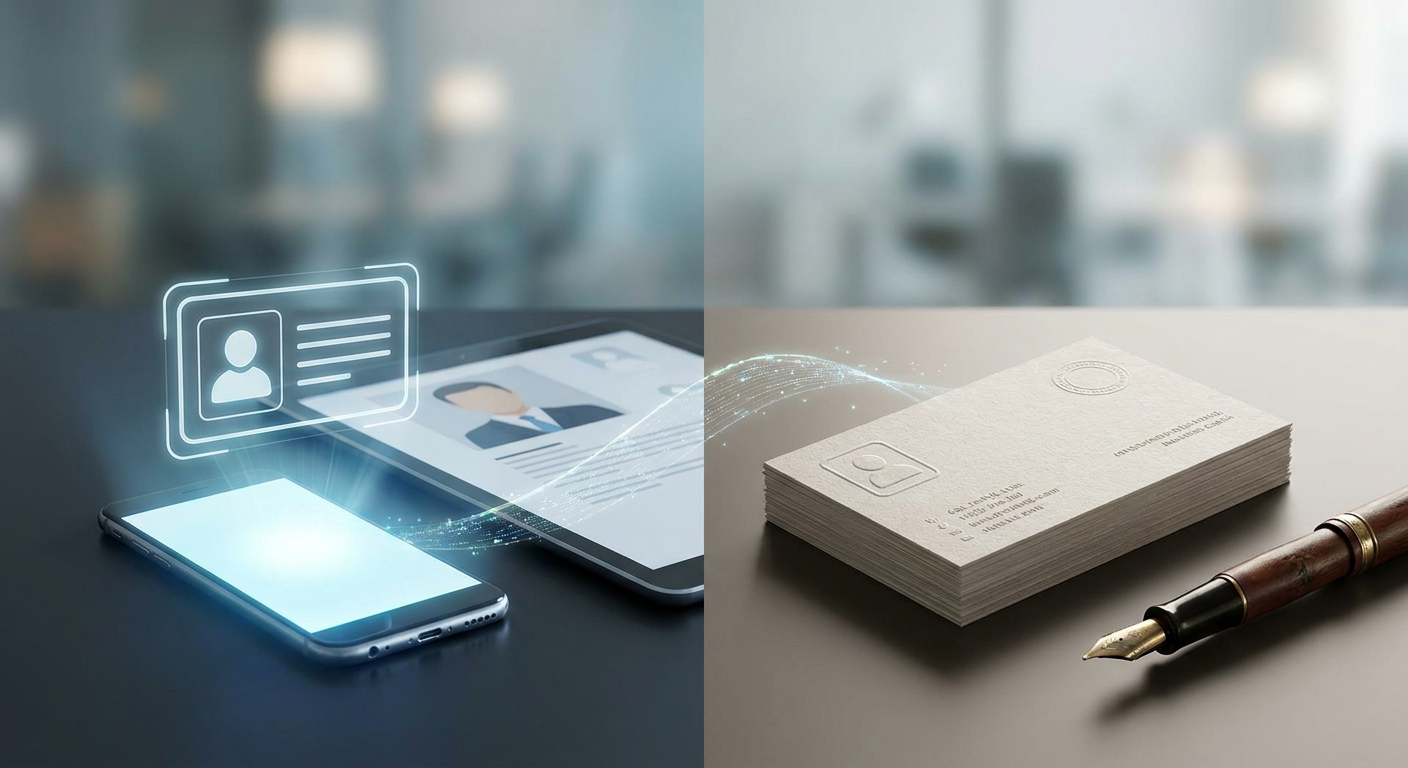
Digital Business Card vs Paper Business Cards: The Ultimate Comparison
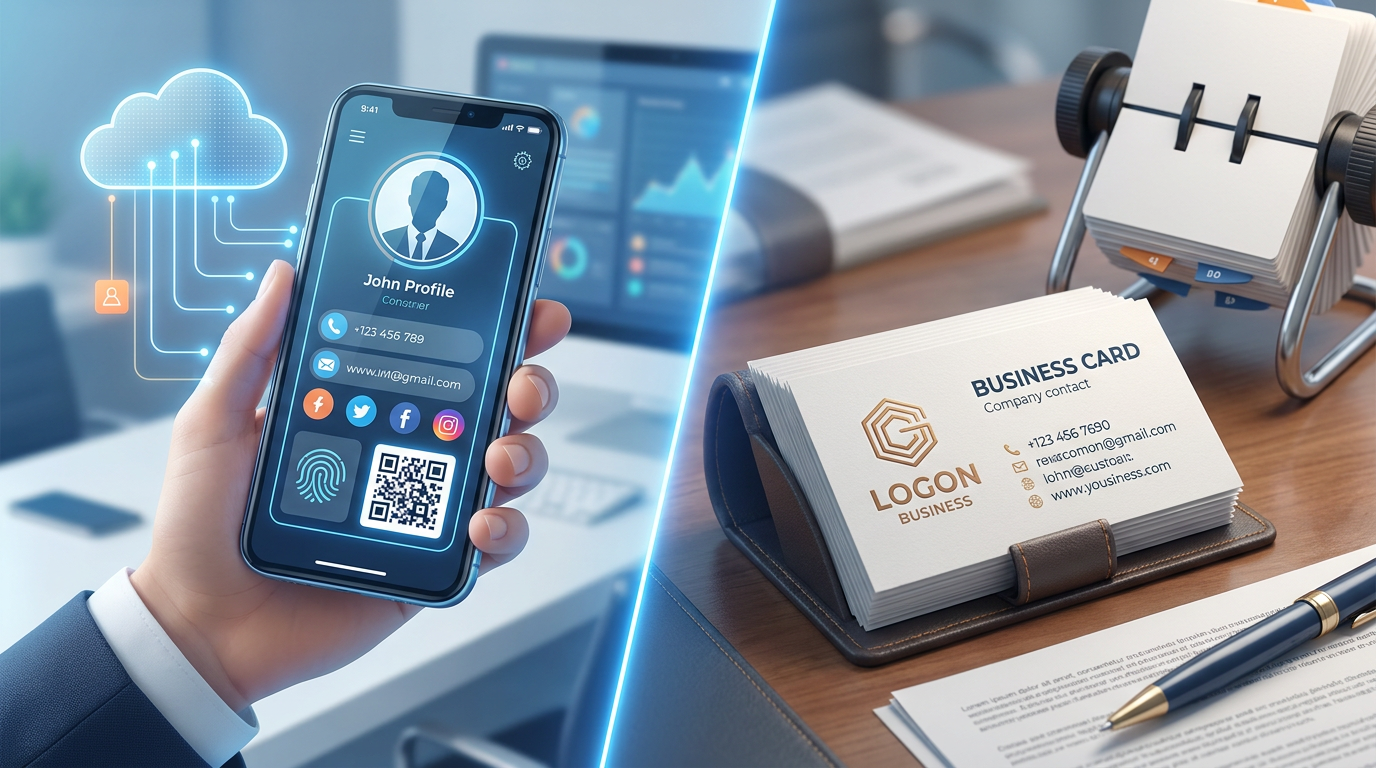
Let's look at how these two approaches stack up side-by-side. When you break down the actual day-to-day utility, the gap between paper and digital becomes pretty hard to ignore.
| Feature / Metric | Digital Business Card | Paper Business Cards |
|---|---|---|
| Upfront & Ongoing Cost | Practically zero. You share it infinitely without ever paying for a reprint. | High. Every minor edit or title change means ordering a new batch. |
| Information Capacity | Nearly endless. You can embed videos, portfolios, social feeds, and payment links. | Stiff and limited. You only get enough space for a name, email, and phone number. |
| Lead Capture | Two-way and automated. It captures lead info and sends it directly to your CRM. | One-way and manual. You hope they take the time to type your details into their contacts. | Interactive Tools | Fully interactive. Includes a direct whatsapp business link in bio, calendars, and live chat. | None. It's just ink on paper. |
| Environmental Impact | Zero waste. 100% sustainable and digital. | Highly wasteful. Millions of discarded cards end up in landfills every year. |
| Analytics & Tracking | Real-time tracking. You see exactly who clicks your links and books appointments. | A complete mystery. Once you hand it out, you have zero data. |
This side-by-side comparison highlights that paper cards are passive, while digital alternatives are active business engines. For professionals striving to convert casual handshakes into paying clients, the digital format is the clear winner.
Why are paper business cards becoming obsolete?
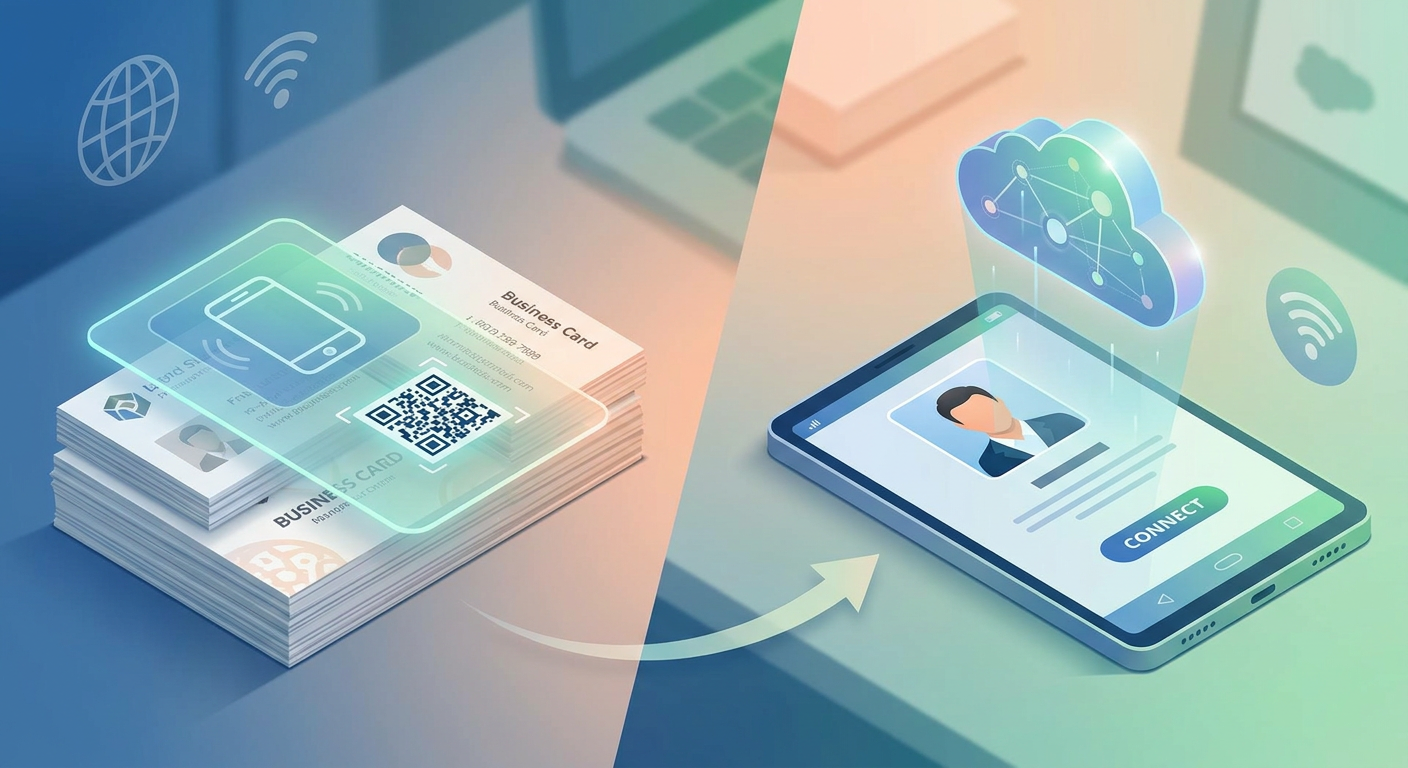
The real deal-breaker with paper cards is that they are entirely frozen in time. The moment your phone number, office address, or job title changes, your entire leftover stack becomes expensive trash. It's an endless cycle of reprinting. Beyond the budget hit, the environmental impact of paper waste is hard to ignore, especially when you realize over 80% of handed-out cards find their way into a trash bin within a single week.
Then there's the friction. When someone hands you a paper card, they're giving you homework. You have to manually type their name, email, and phone number into your contacts. Let's be honest—most of us leave those cards on our desks until we throw them away. Digital alternatives remove that hurdle entirely. One quick tap or scan, and your contact info is saved on their phone instantly.
What are the benefits of a digital business card?
A digital card gives you a level of adaptability that paper simply can't touch. Because you are working with Dynamic QR Codes, you can share your details anywhere—in person, inside your email signature, or on a slide during a Zoom call. Your network can grab your info whenever and wherever they run into you.
But it's not just about sharing a phone number. Think of your digital card as a micro-website. You can link directly to your latest projects, feature client reviews, embed a live calendar, or set up a whatsapp business link in bio so people can text you instantly. This turns your card from a passive directory listing into a highly effective tool for landing new clients.
How does an AI booking system integrate with digital identity?
Modern networking is all about striking while the iron is hot. If a prospect is looking at your profile right now, you want them to book a call immediately—not send a vague email hoping you'll reply with calendar slots. This is where integrating an Online Booking tool completely changes how you work.
When you place an ai booking system directly on your card, prospects can see when you are free and lock in a meeting on the spot. By removing the back-and-forth email dance, you secure high-intent leads while they are still excited to talk to you. It's like having a 24/7 digital assistant scheduling your calls for you.
The Rise of the Digital Twin in Modern Networking
Let's face it: a boring list of links doesn't impress anyone anymore. People want quick answers and interactive experiences. That’s why the industry is moving toward "Digital Twins"—basically, an AI-powered version of you that stays online to chat with potential clients even when you are asleep.
An ai chatbot for business can easily learn your pricing, FAQs, services, and scheduling rules. When someone lands on your digital card, the bot acts like a virtual assistant, handling quick questions and steering prospects toward your call-to-action buttons. Merging this with ai customer service means your business never actually closes, freeing you up to focus on deep work while your pipeline stays full.
How Qret.me Redefines Your Professional Presence
If you're ready to ditch paper and step up your networking game, Qret.me is a fantastic place to start. Think of it as an all-in-one, AI-driven platform that replaces about five different paid subscriptions. It essentially builds that "Digital Twin" for your professional brand without the headache of managing multiple tools.
Here is what you can do with Qret.me right out of the box:
- Bio Link Pages: Design clean, highly customizable link-in-bio profiles using over 15 responsive themes and easy drag-and-drop design blocks.
- AI Chatbot: Get 100 free credits every single month across all plans to train an assistant that answers visitor questions while you're offline.
- Smart Booking System: Streamline your calendar for consulting, freelance gigs, medical clinics, or beauty salons with a built-in scheduling tool.
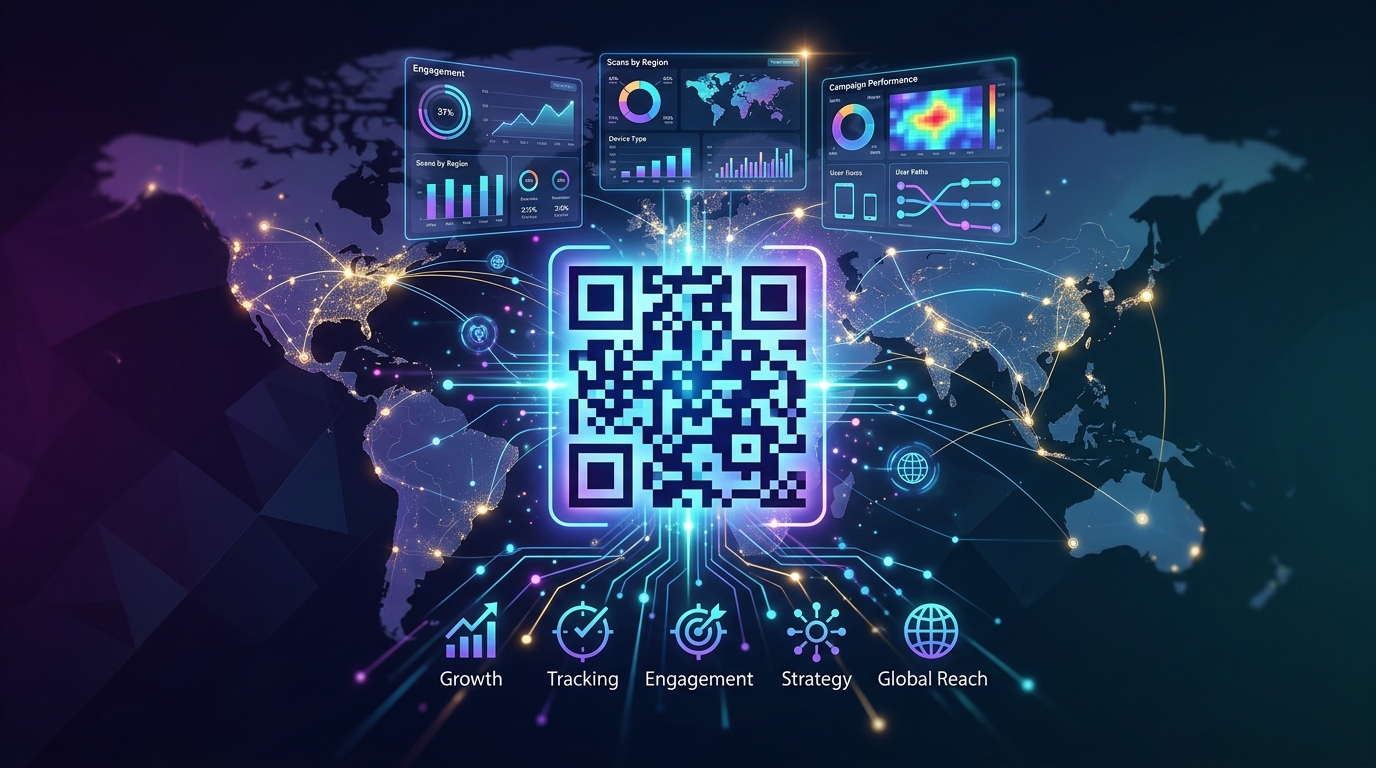
- Dynamic QR Codes: Generate custom, trackable QR codes that you can update anytime behind the scenes without having to reprint any graphics.
- URL Shortener & Analytics: Track exactly how people interact with your profile, where they click, and what's driving the most business.
Unlike basic link tools that just list a few URLs, Qret.me brings these features together under one roof. Whether you want a simple whatsapp business link in bio or a fully automated booking funnel, you've got everything you need to stand out.
Conclusion
When you weigh a digital business card vs paper business cards, it's really no contest. Physical cards are static, expensive, and easy to lose. Digital profiles, on the other hand, are adaptable, eco-friendly, and packed with automation like smart scheduling and live chatbots that work for you around the clock.
Ready to upgrade your professional brand and start generating leads on autopilot? Give Qret.me a try for free today. You can build your digital twin in just a few minutes, and you don't even need a credit card to get started.
Frequently Asked Questions
Are digital business cards really better than paper business cards?
Absolutely. They are infinitely editable, trackable, highly cost-effective, and better for the planet. Plus, they let you integrate tools like booking calendars, video links, social channels, and automated AI chat assistants that paper simply can't support.
Can I use my own branding on a digital business card?
Yes, and you should. Platforms like Qret.me give you full control over your layout, letting you customize colors, upload logos, choose themes, and build custom blocks that match your company's aesthetic.
How do people scan or open a digital business card?
It's incredibly simple. You can show them a Dynamic QR Code on your phone, write it to an NFC-enabled card, add a short link to your email signature, or link to it directly from your social media bios.
Does a digital business card support automated booking?
Yes, many do. With advanced options like Qret.me, you can embed an interactive appointment calendar directly onto your profile, allowing clients to see your real-time availability and book sessions in seconds.