


How to Setup an AI Customer Service Phone Agent (2026 Guide)
Let’s face it—nobody wants to wait on hold anymore. Whether your business is based in Europe, Asia, or Turkey, customers expect answers right now, not three days later via a support ticket. That is why so many brands are turning to an AI customer service phone agent. Instead of putting callers on pause, these voice-first systems answer instantly, manage massive call volumes without sweating, and hook directly into your digital setup to get things done on the spot.
Simply put, an AI customer service phone agent is an automated, voice-based assistant driven by conversational AI. It handles incoming calls like a human receptionist—interpreting natural speech, answering customer questions, and connecting directly to databases or an ai booking system to book appointments around the clock without needing manual oversight.
Key Takeaways
- Instant Resolution: No more hold music. These agents handle thousands of calls at the exact same time without missing a beat.
- Smarter Integrations: By linking your voice agent to an ai booking system, you can automate bookings from start to finish.
- Omnichannel Harmony: Real efficiency kicks in when you pair voice assistants with web-based Digital Twins.
- Cost Efficiency: Companies in Europe, Turkey, and Asia can scale up global support without hiring an army of new agents.
Why Your Business Needs an AI Customer Service Phone Agent
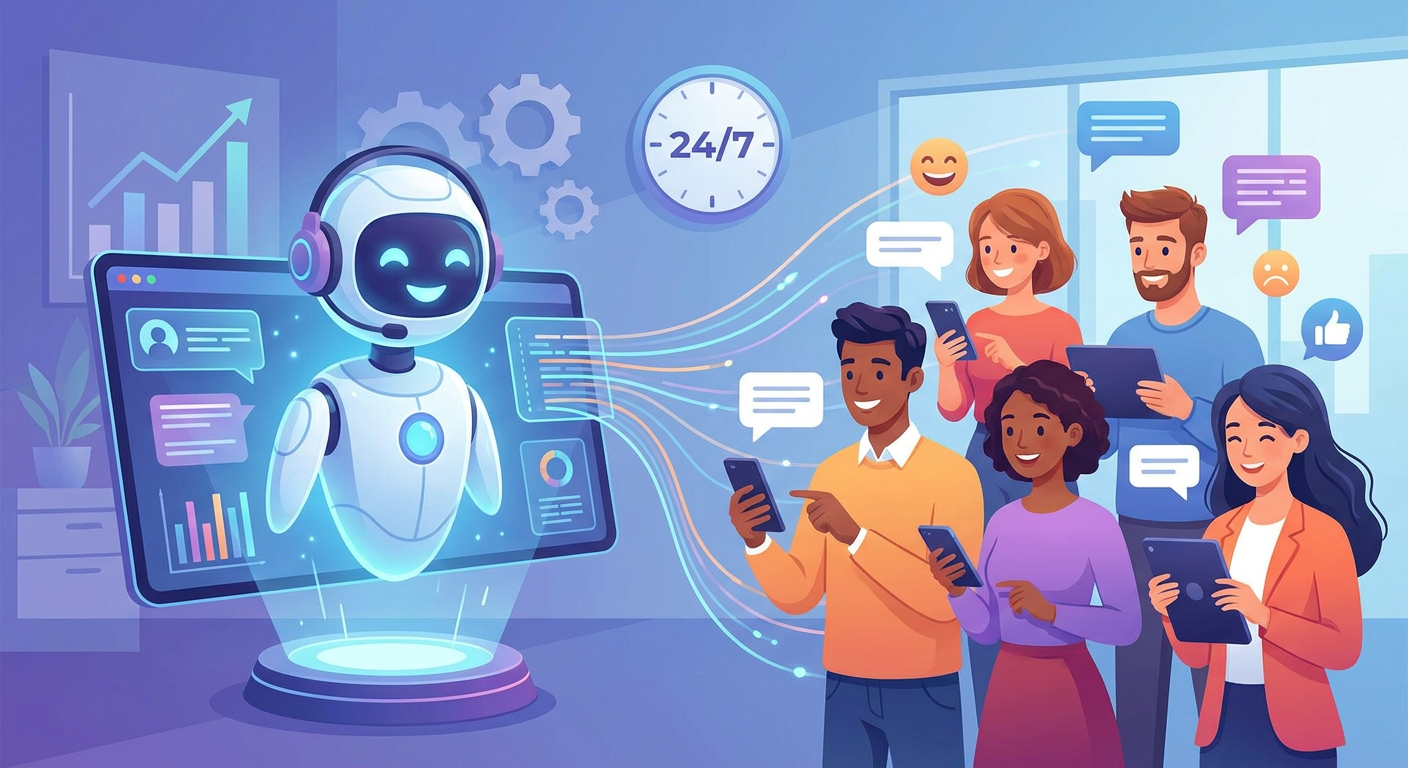
We live in an era of instant gratification. If a customer has to wait twenty minutes just to ask a simple question, they will probably hang up and head straight to your competitor. Let’s be honest: traditional call centers—with their high turnover rates and endless staffing shortages—are becoming too expensive and too slow for modern businesses to rely on.
An AI-driven voice agent changes the game by answering calls instantly, speaking with natural, human-like rhythm and tone. By automating these repetitive conversations, you get to bypass standard human bottlenecks and run a true 24/7/365 operation without breaking the bank. It doesn't matter if you're managing a busy medical clinic in Istanbul, an e-commerce brand in Berlin, or a logistics business in Singapore—a virtual phone assistant makes sure you never miss a lead or leave a question unanswered.
Research from companies like Gartner backs this up, showing that automated customer interactions are saving businesses billions in labor while actually improving customer satisfaction. Far from being a sci-fi dream, this technology has quickly become a basic operational standard.

How Does an AI Customer Service Phone Agent Work?
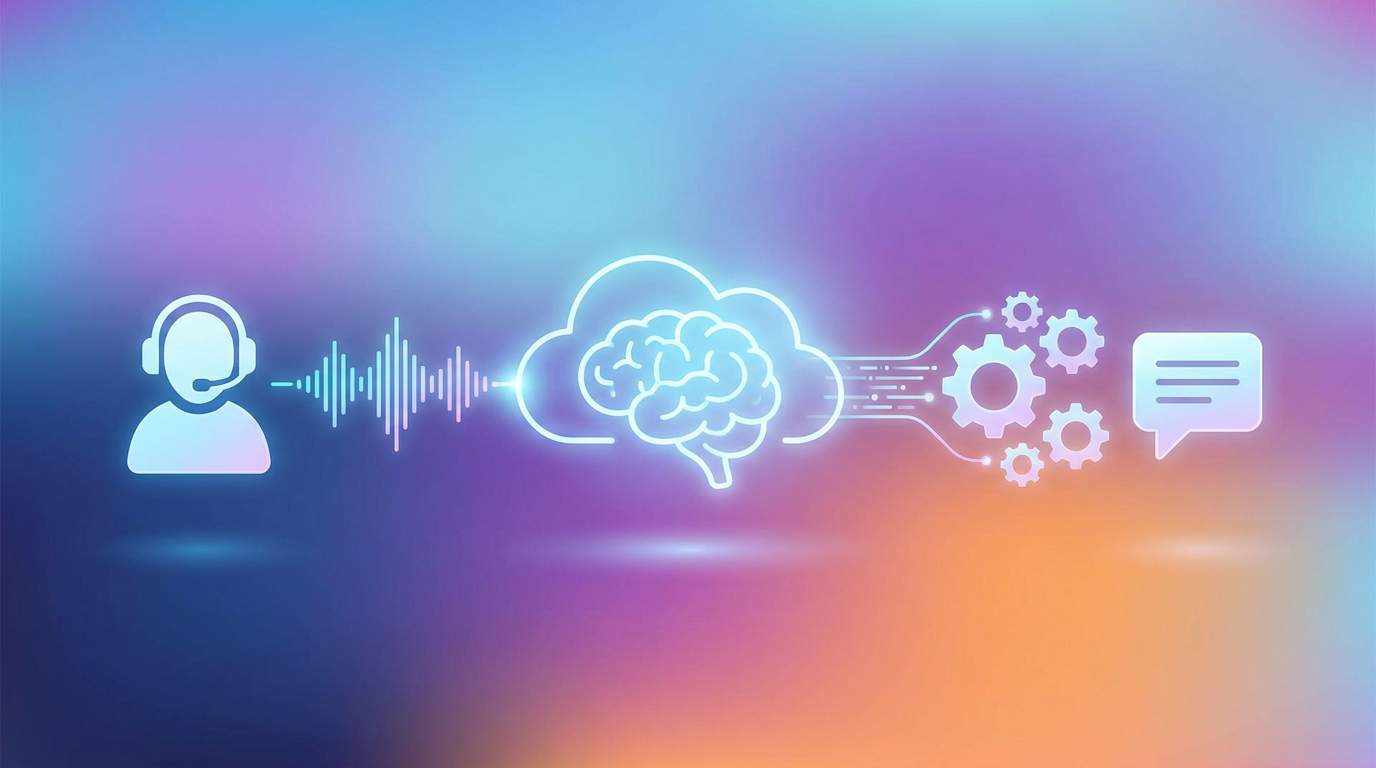
So, what actually happens behind the scenes? A modern AI voice agent relies on a clever tech stack that processes human speech in real time. The moment a customer starts talking, the system pulls off three complex steps in a fraction of a second:
- Automatic Speech Recognition (ASR): This is where the system listens to the caller's audio and instantly translates it into clean, written text.
- Natural Language Processing (NLP): Once it has the text, the AI figures out the customer's intent—matching their query against your business rules, FAQs, and database APIs.
- Text-to-Speech (TTS): Finally, the AI creates a natural, human-sounding voice response to answer the caller dynamically on the spot.
The beauty of modern NLP is that it doesn't get tripped up by natural phrasing, accents, or everyday slang. If a customer says, "Can I grab a slot for tomorrow morning?" the AI easily decodes the meaning. It recognizes the booking request, queries your calendar, and offers matching times in an instant.
What is the Difference Between Traditional IVR and AI Phone Agents?
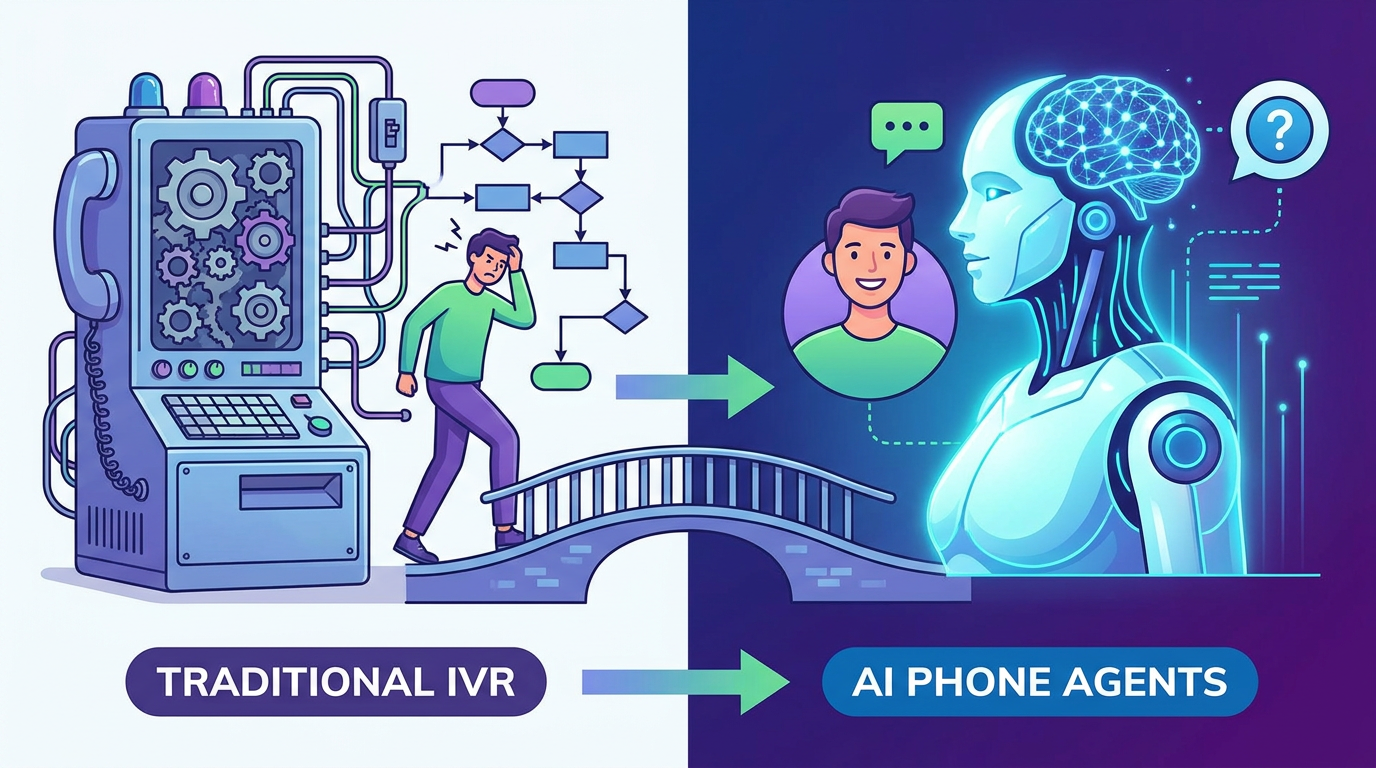
We’ve all been trapped in phone menu purgatory. You know the drill: "Press 1 for billing, press 2 for sales, press 9 to repeat this menu." These traditional Interactive Voice Response (IVR) systems are notorious for annoying customers, driving up hang-up rates, and failing to actually solve anything without a human agent stepping in.
Conversational AI flips this script entirely. Instead of hitting keypad buttons, customers just talk naturally, exactly like they would to a real receptionist. To see the difference, let’s look at how they stack up across key business metrics:
| Feature | Traditional IVR | AI Phone Agent | Qret.me Digital Twin |
|---|---|---|---|
| Navigation | Rigid keypad menus | Natural conversation | Multi-channel (Web, QR, Voice) |
| Contextual Awareness | None | High; recalls past sentences | Maximum; centralizes all profiles |
| Setup Complexity | High (requires telecom engineers) | Moderate (API-driven integrations) | No-code (drag-and-drop setup) |
| Booking Capabilities | Extremely limited | API connection required | Direct native integration |
Connecting Voice and Digital Channels with an AI Booking System
A voice assistant is helpful on its own, but its real power is unlocked when it links directly to your central business data. Connecting the agent with an ai booking system is the perfect example of how this works in practice.
Picture a busy salon or a medical clinic. Instead of making a front-desk receptionist pause what they are doing to manually log an appointment, the AI voice agent handles the whole transaction. It checks the live calendar, proposes available slots, gathers the caller's details, and fires off an automated SMS confirmation with a helpful link.
This clever blend of voice and digital links creates a genuinely frictionless experience. The moment the customer gets that confirmation text, they can tap the link to reschedule, browse your services, or view your location directly on their phone—instantly bridging the gap between voice and screen.
How Can Businesses in Turkey, Europe, and Asia Benefit?
Of course, implementing AI isn't a one-size-fits-all job; it requires a bit of local nuance. Different cultures communicate differently, and a smart system knows how to adapt to these regional styles:
- Turkey: Direct, fast communication is key in Turkey. Customers almost always prefer picking up the phone or sending a message rather than waiting around for an email reply. An automated phone agent that speaks natural Turkish keeps customers happy and helps boutique hotels, medical clinics, and local restaurants handle demand easily.
- Europe: Operating in Europe means staying strictly aligned with data privacy rules like GDPR. A secure conversational AI setup handles customer data safely, offering clear privacy opt-ins and sending direct policy links during or right after a call.
- Asia: Multilingual support is non-negotiable in Asia's diverse, fast-moving business hubs. Voice agents that can switch smoothly between English, Mandarin, Turkish, or Arabic allow local brands to run highly scalable, global customer service operations without language barriers.
At the end of the day, no matter where your business is based, linking voice agents with easy-to-use digital menus and profile cards is an easy way to drive up cross-channel conversions.
Maximizing ROI by Integrating Voice and Digital Twins
Relying on just one support channel is a recipe for missed opportunities. If a customer is driving, they’ll want to make a quick phone call. But if they're sitting on a quiet train, they’d much rather browse a digital catalog on their screen. True operational efficiency is about meeting people wherever they happen to be.
That’s where pairing your voice assistant with a "Digital Twin" platform changes everything. If your phone lines are busy or if a customer needs visual confirmation of your work, the voice AI can automatically text them a dynamic link. That link leads to a centralized digital hub holding your contact info, booking forms, catalogs, and social links.
This kind of flexible setup keeps customer frustration to an absolute minimum. If your support team is busy, the customer can seamlessly hop over to your interactive web portal to book a time, buy a digital product, or find answers in seconds.
How Qret.me Bridges the Gap Between Voice, Web, and Bookings
Building standalone voice agents from scratch is notoriously complex—and expensive. That is why all-in-one digital presence platforms like Qret.me are such a game-changer. Qret isn’t just another boring link list. It serves as an active, intelligent Digital Twin for businesses, creators, and freelancers around the globe.
With Qret.me, you can pool your scheduling tools, business details, and conversational AI into one simple dashboard. It's an all-in-one ecosystem designed to make running your business easier:
- Smart Booking System: Skip the expensive third-party booking tools. Our built-in Online Booking System lets your clients book appointments right from your public profile page.
- AI Chatbot: Even on our free tier, every Qret user gets 100 free AI credits per month. Our AI Assistant learns directly from your profile bio, custom blocks, and business policies, letting it answer customer questions 24/7 with zero human intervention.
- Dynamic QR Codes: Generate fully custom-branded, trackable Dynamic QR Codes that link clients instantly to your booking portals, digital menus, or service lists.
- Bio Link Pages: Build gorgeous, highly responsive mobile landing pages with our simple drag-and-drop editor. You can easily direct callers from your phone support channels straight to these Bio Link Pages to complete tasks on the fly.
Think about it: instead of paying for five different software subscriptions—one for booking, one for bio links, one for QR codes, one for your catalog, and another for AI tools—Qret.me bundles everything under one simple roof. It's the easiest way to connect your physical or voice channels with your online presence.
Ready to put your booking and support on autopilot? Create your free Qret.me Digital Twin today—no credit card required.
Frequently Asked Questions
What is an AI customer service phone agent?
An AI customer service phone agent is a software assistant that uses speech-to-text, natural language processing, and conversational AI to handle phone calls. It can answer questions, resolve basic customer issues, and schedule bookings automatically without human help.
Can a voice AI agent integrate with an AI booking system?
Absolutely. Modern AI voice agents connect directly to an online scheduling tool via APIs. This allows callers to check open times, secure a spot, and receive an automated text confirmation during the call.
Is a digital twin better than a standard link directory?
Yes, by a landslide. Traditional link lists are static and passive. An interactive Digital Twin like Qret.me is a living business profile equipped with conversational AI, integrated scheduling tools, custom QR codes, and digital catalogs to automate your customer touchpoints while you sleep.