

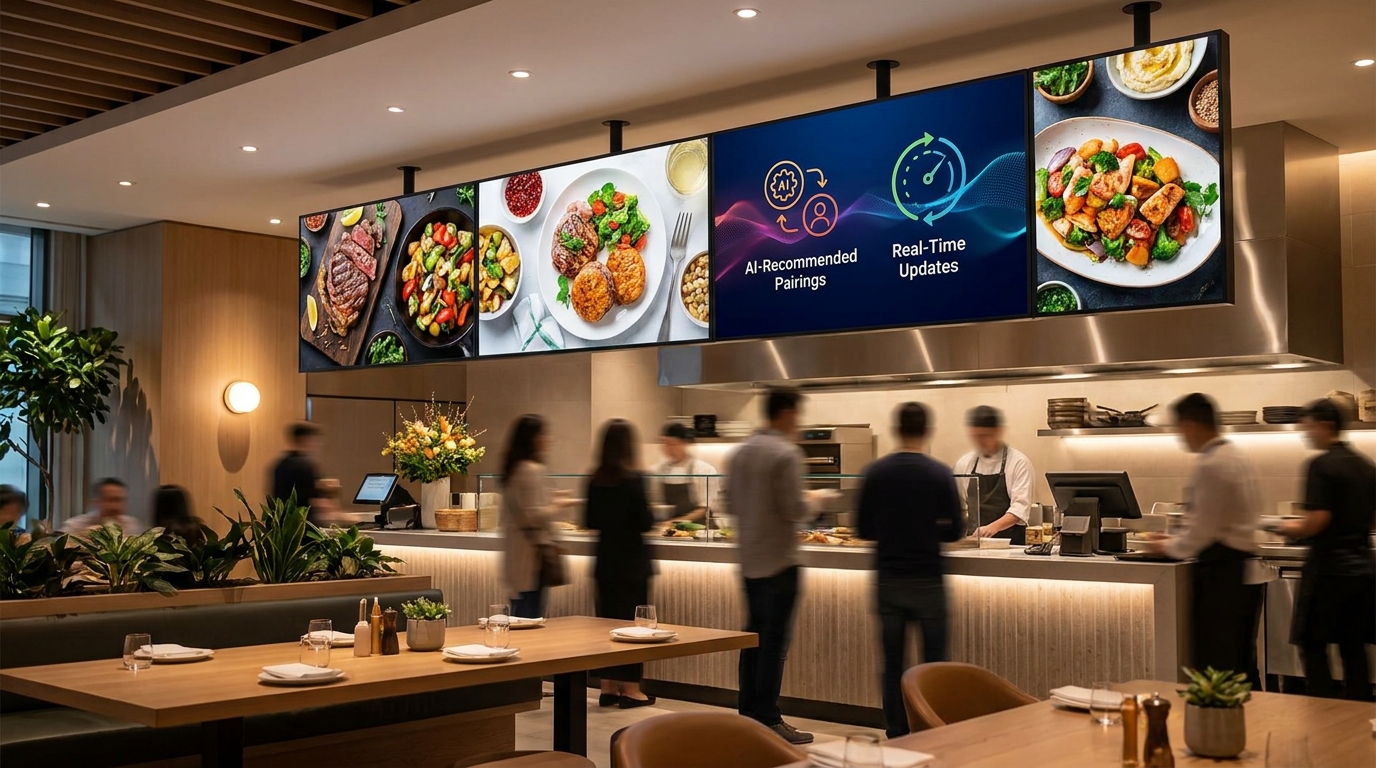
The Ultimate 2025 Guide to Digital Menu Boards for Restaurants: Transforming Dining with AI and Real-Time Data
Walk into any high-performing eatery today and you'll notice it immediately: the era of the fading, grease-stained paper menu is effectively over. As we move through 2025, digital menu boards for restaurants have evolved from simple screens into "smart" command centers driven by AI. These systems do more than just show prices—they manage your inventory on the fly and subtly nudge customer behavior. With the restaurant digital signage market for food and beverage projected to grow by over 10% annually, it's clear that owners are ditching paper to save time and dodge those skyrocketing printing costs.
For a busy operator, shifting to digital menu boards for restaurants isn't just a cosmetic upgrade; it's an agility play. Think about it: a manager can now pivot pricing in seconds. You can yank an "out of stock" item from the display before a guest even has the chance to get disappointed. Plus, when the lunch rush hits, you can instantly highlight your highest-margin specials. This guide breaks down the tech shaping the industry and looks at how platforms like Qret.me are using Artificial Intelligence and "Digital Twins" to give local spots an enterprise-level edge.
1. What are Digital Menu Boards for Restaurants?
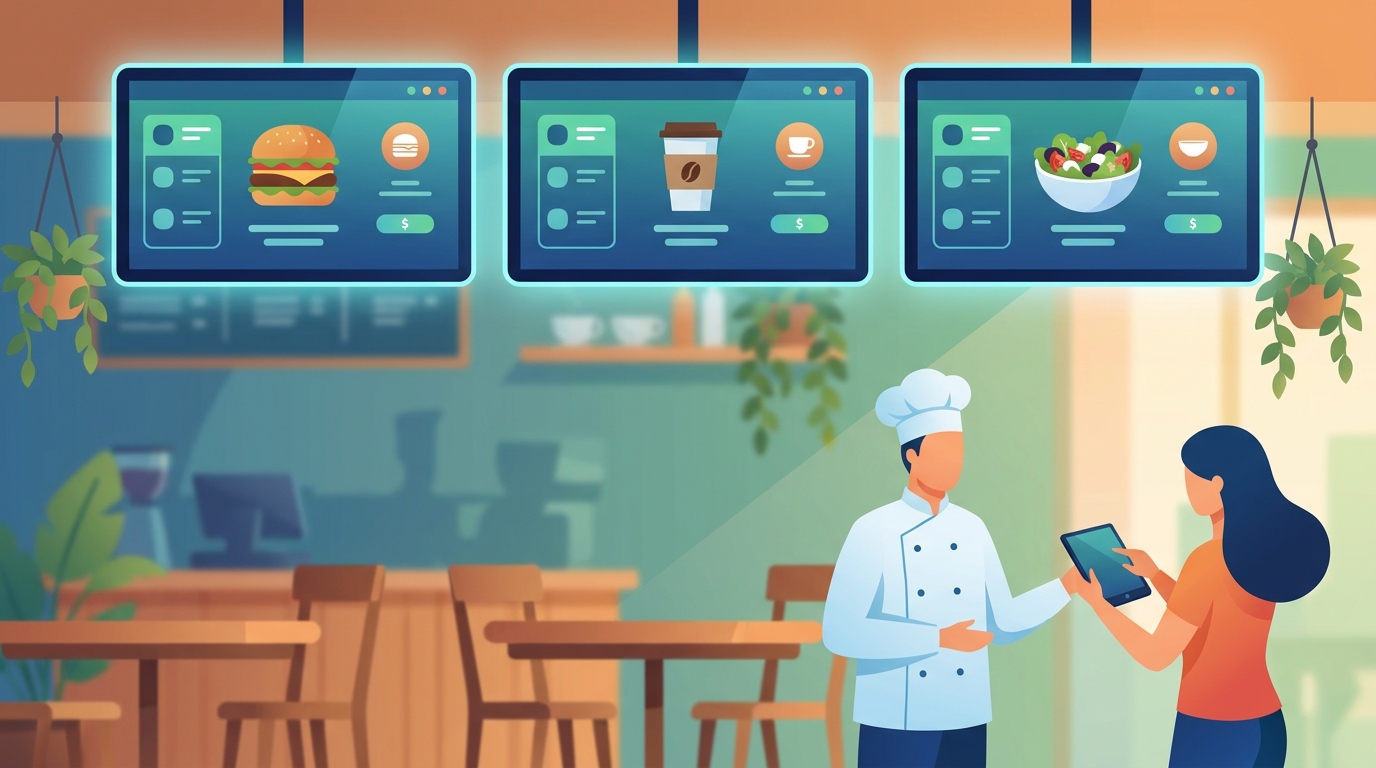
At their most basic, digital menu boards for restaurants are high-def electronic displays—usually industrial-grade LCD or LED. But the real magic happens behind the glass. These screens run on a Content Management System (CMS) that allows for instant, remote updates. Instead of waiting for a printer, digital menu boards for restaurants give you a live feed that improves order accuracy and uses high-impact visuals to drive sales.
The Move Toward Dynamic Content
Remember those old lightboxes with the sliding plastic letters? They were a nightmare to maintain. If the kitchen ran out of the catch-of-the-day, someone had to find the masking tape. Modern digital menu boards for restaurants solve this instantly. By pairing a QR code menu with cloud-connected screens, your physical signage and your digital menu stay perfectly synced. If it's on the screen, it's in the kitchen.
Types of Digital Displays
- Indoor Menu Boards: These are your workhorses, positioned right behind the counter to guide the ordering process.
- Drive-Thru Displays: These need to be rugged—weatherproofed screens that can fight off direct sunlight and torrential rain.
- Window Displays: High-brightness screens designed specifically to stop foot traffic in its tracks.
- Personal Device Menus: This is the contactless dining 2025 trend in action, where the guest’s own smartphone becomes the menu. It's a core feature of the Qret.me digital menu platform.
2. The Economic Impact: ROI and Revenue Growth
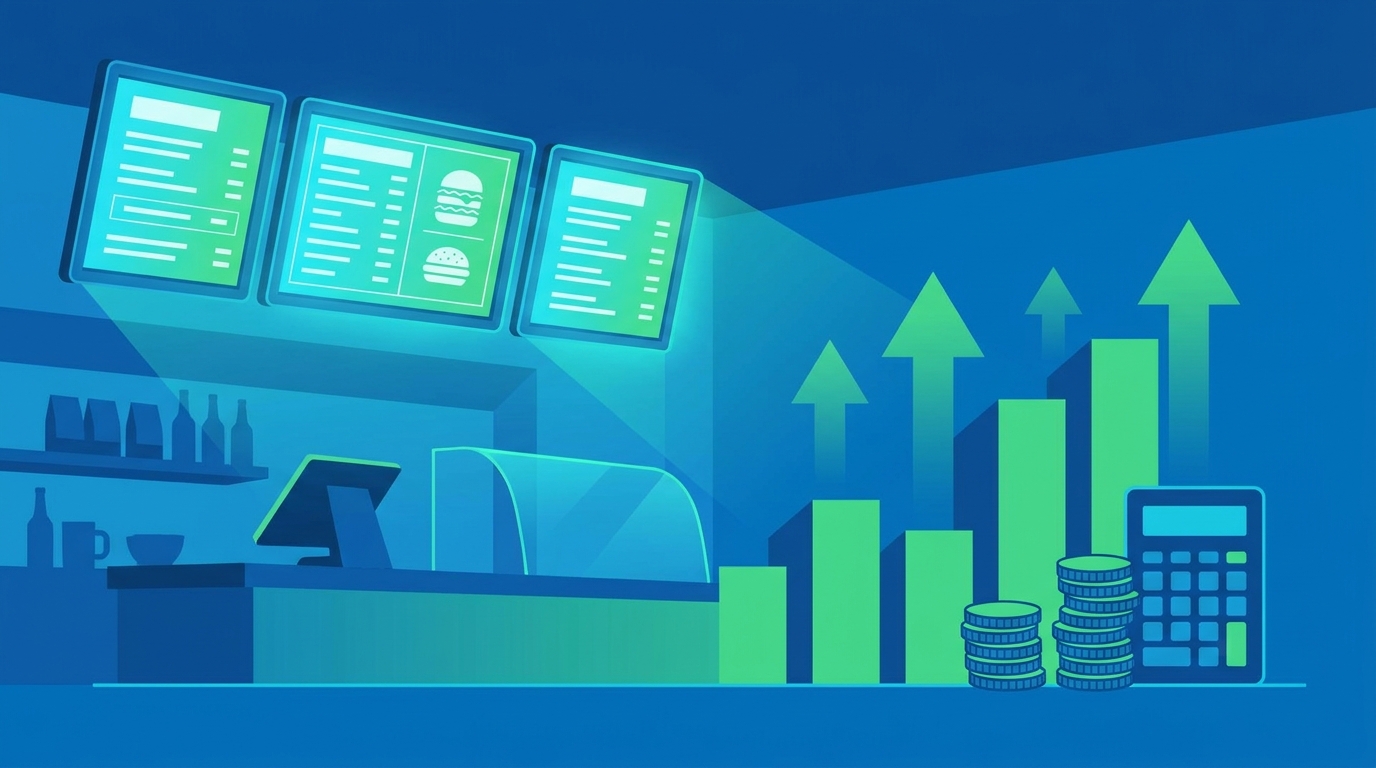
Let's talk money. Installing digital menu boards for restaurants is an upfront investment, sure, but most owners see that capital return to their pockets within 12 to 18 months. Hard data suggests that restaurant digital signage can lift overall sales by 3% to 5%, while specifically targeted visuals can send the sales of high-margin items soaring by as much as 30%.
Killing the Print Budget
The average restaurant burns thousands of dollars a year on design fees and physical printing. Switch to digital menu boards for restaurants, and that line item on your P&L virtually disappears. Need to adjust prices because your supplier raised the cost of eggs? It's free to update. For those managing multiple locations, it ensures your pricing is consistent across the board with one click.
Mastering the "Golden Triangle"
Ever heard of digital menu engineering? It’s the science of how your layout dictates what people buy. With digital menu boards for restaurants, you can use subtle motion to pull the eye toward the "Golden Triangle"—the center, top right, and top left of your screen. This is where you place the "profit makers." Even a tiny bit of animation—like steam curling off a bowl of ramen—can trigger a visceral "I want that" response from a hungry customer.
Dayparting: Right Message, Right Time
One of the slickest features of digital menu boards for restaurants is "dayparting." You don't want people trying to order pancakes at 4 PM. The system automatically flips from breakfast to lunch based on the clock, reducing staff headaches and customer confusion. Some advanced setups even pull weather data—promoting hot lattes when it's pouring and iced teas when the sun comes out.
3. Hardware vs. Software: Choosing the Right Setup
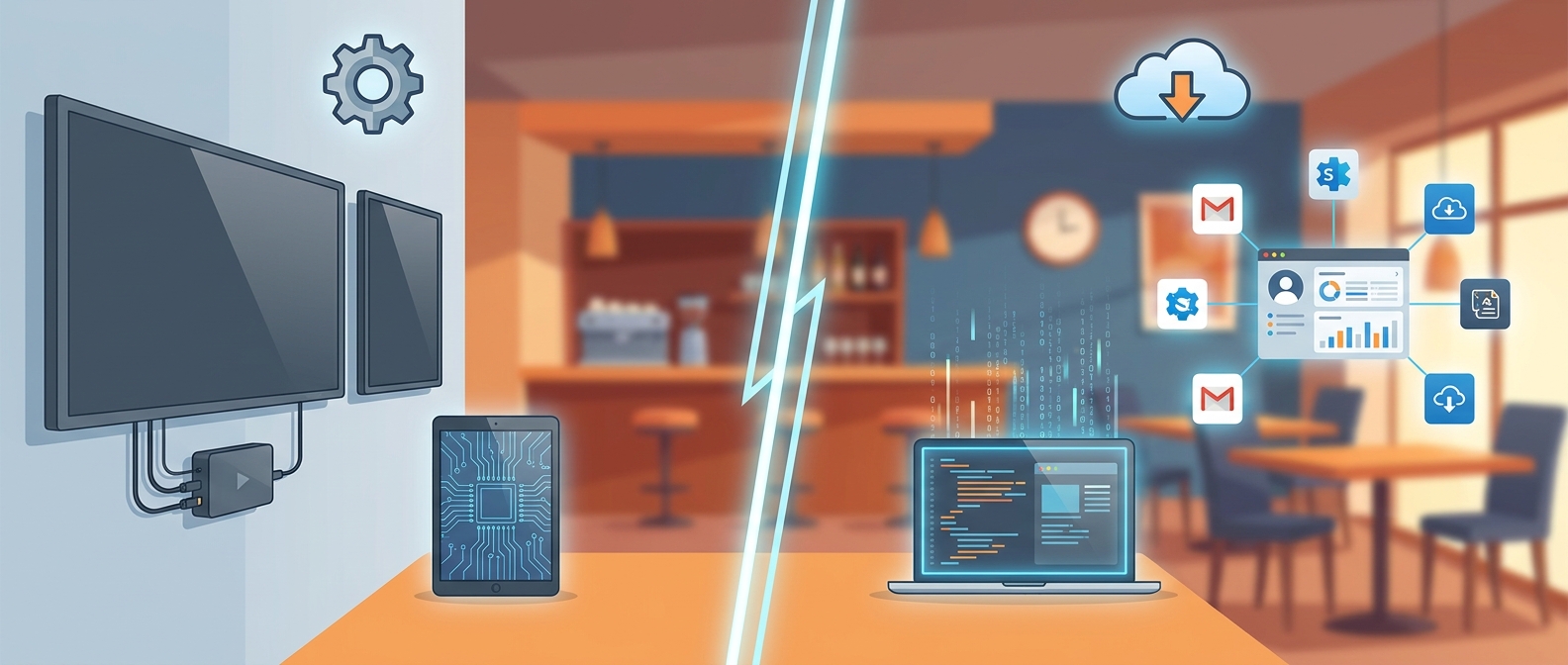
To really make this work, you need a balance of tough hardware and intuitive software. One word of advice: don't just grab a consumer TV from a big-box store. They aren't designed to run 16 hours a day in the heat and humidity of a commercial kitchen, and their warranties usually won't cover your business if they fail.
Commercial-Grade Displays
Professional screens feature better cooling systems and much higher "nit" levels (brightness). For a drive-thru, you need that extra punch so the text doesn't wash out in the afternoon sun. These units are also designed to be mounted in "portrait" or "landscape" mode without burning out the pixels, giving you more flexibility with your restaurant digital signage layout.
Modern Software Solutions: The Qret.me Advantage
While old-school setups work, Qret.me takes a more integrated approach. By creating a "Digital Twin" of your business, Qret lets you manage your table QR codes, your AI assistant, and your menu boards from one dashboard. It kills the need for a dozen different subscriptions. With its Digital Menu toolkit, you can manage your categories and photos in a way that ensures your mobile menu and your wall-mounted boards are always identical twins.
4. Designing for Conversion: Menu Engineering
Design is where tech meets psychology. A cluttered screen is a conversion killer—it confuses the guest and slows down your line. The best digital menu boards for restaurants follow a few "golden rules" for clarity and sales.
- Quality Over Quantity: One stunning, professional photo is worth more than ten grainy snapshots. Use a tool like the Image to WebP Converter to keep your files light and your load times fast.
- Readability is King: Stick to clean, sans-serif fonts. If a customer can't read the price from six feet away, your design has failed.
- Intentional Motion: Keep it subtle. A slow pan across a fresh pizza is enticing; a flashing "SALE" sign is just annoying.
5. Integrating AI: The Rise of the AI Waiter
The headline for 2025 is AI integration. We've moved past just showing a list of items; now, the menu actually "understands" what it's selling.
Personalization Powered by AI
What if your menu could answer questions? This is where the AI restaurant assistant comes in. These AI agents are trained on your specific ingredients and allergens. A guest can scan a link on your digital menu boards for restaurants and ask, "Is the pesto nut-free?" The AI answers instantly, freeing up your servers to focus on actually running the food. It's like having your best waiter at every table and every screen, simultaneously.
6. Implementation Roadmap: 5 Steps to Success
Moving to digital menu boards for restaurants isn't a project you want to wing. Here’s a basic checklist to get it right the first time.
Step 1: What’s the Goal?
Are you trying to move the line faster, or are you trying to upsell premium sides? Your objective dictates the design. Speed-focused menus use large text and clear pricing; luxury brands focus more on high-end food photography.
Step 2: Scrutinize the Space
Where's the power? How's the Wi-Fi signal at that specific spot on the wall? Check for window glare during different times of the day. If the screen is washed out by 3 PM sunlight, your customers can't order.
Step 3: Picking Your Platform
You can go with a traditional signage company, or an all-in-one cloud platform like Qret.me. If you want to link your on-site boards with an online booking system, the all-in-one route is usually much cheaper and easier to maintain.
Step 4: Build the Content
Don't just upload a PDF of your paper menu. Use the dynamic space you've paid for. Use an Image Compressor to ensure your high-res photos don't lag the system. Remember: 30% of the screen should be dedicated to your "stars"—the high-profit, high-popularity items.
Step 5: Review the Data
The beauty of digital is that it's never "finished." Use link analytics to see what your customers are actually looking at. If that new dessert isn't moving, swap the photo or change its position on the screen. It doesn't cost a dime to experiment.
7. Compliance and Accessibility
Modern digital menu boards for restaurants also help you stay on the right side of the law. In many regions, showing calorie counts is mandatory. Digital screens allow you to toggle this info or display it clearly without cluttering the aesthetic. Also, don't forget accessibility—high-contrast color schemes help guests with low vision navigate your offerings with ease.
8. The Qret.me Solution: More Than a Digital Poster
Plenty of companies will sell you a screen and walk away. Qret.me is different; it's a full operating system for the modern dining room. When you pair digital menu boards for restaurants with the Qret ecosystem, you're building a smarter business.
- Consolidated Tech Stack: Stop paying for five different apps. Use one Business Plan for your bookings, QR codes, and digital displays.
- Tireless AI Support: Your AI restaurant assistant works 24/7, handling bookings and ingredient questions even when you're sleeping.
- Brand Integrity: Keep your high-res logos and assets safe and accessible in the Identity Vault.
Frequently Asked Questions (FAQ)
How much do digital menu boards for restaurants cost?
Prices vary based on the hardware and software choices you make. However, between the savings on printing and the increase in average order value, most restaurants reach their ROI "break-even" point in 12 to 18 months.
Can I update my digital menu boards remotely?
Absolutely. That’s the whole point. With a cloud-based system, you can update your digital menu boards for restaurants from your laptop at home or your smartphone while on the move.
Do I really need a commercial TV?
Short answer: Yes. Consumer TVs aren't built for the "always-on" environment of a restaurant. Commercial screens are brighter, last longer, and come with warranties that actually cover business usage.
How do digital menus help with contactless dining?
In 2025, digital boards often act as the "anchor" for a QR code menu. Guests see the big screen, scan the code, and order directly from their phone—minimizing physical contact and speeding up the kitchen's workflow.
What exactly is digital menu engineering?
It’s the strategic use of layout, color, and motion on your digital menu boards for restaurants to guide the customer’s eye toward your most profitable items. It’s about using psychology to boost your bottom line.
The Bottom Line
Digital menu boards for restaurants are no longer a "nice-to-have" luxury; they are the foundation of a modern, profitable business. They give you total control over your pricing, your branding, and your sales strategy in real-time. By moving away from static paper and embracing AI, you're positioning your restaurant to win. Platforms like Qret.me make that transition painless. Whether you're a single-location cafe or a growing franchise, the future is digital.
Want to see it in action? Try Qret.me for free today. You can have your new digital menu up and running in minutes—no credit card required to get started.