

Digital Menu Restaurant Software: The Modern Roadmap to Success
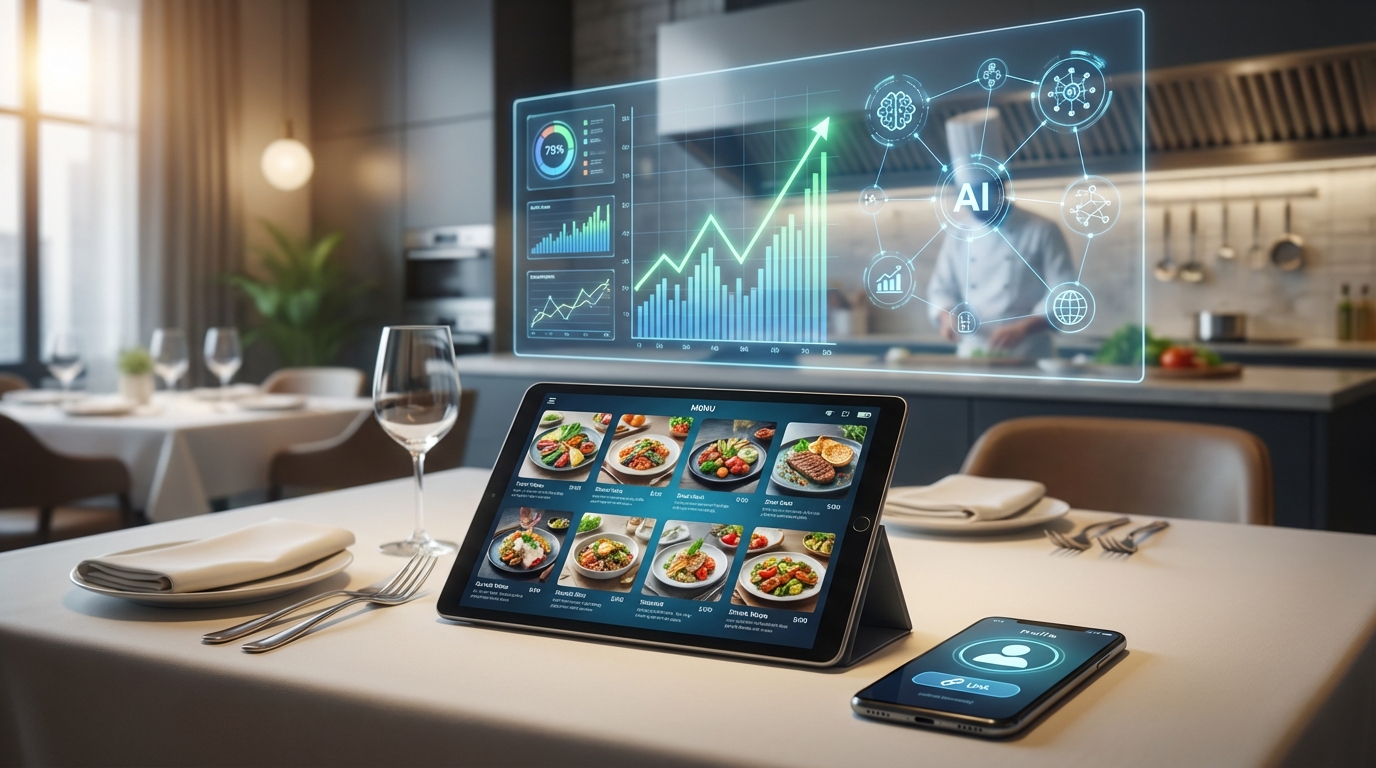
The days when menus were just laminated cardstock are over. Today, digital menu restaurant software isn't just a tech trend—it’s the literal backbone of a functional dining room. At its simplest level, these systems let you showcase your dishes on interactive screens, usually triggered by a quick QR code scan. But let's be clear: the technology has moved far beyond a simple digital list. The best digital menu restaurant software now acts as a 'Digital Twin' for your brand. It pairs high-res photography with real-time updates and integrated booking tools—some even feature AI assistants that can explain ingredient lists or cross-check for allergies faster than a busy server could.
Owners are leaning into this tech for two very practical reasons: efficiency and the bottom line. According to the National Restaurant Association, nearly 80% of operators are now looking to technology to get a competitive edge—especially when dealing with labor gaps and the headache of rising food costs. By adopting a platform like Qret.me, you can actually scrap half a dozen different subscriptions. You won't need separate tools for bio links, booking calendars, or chatbots. This guide is about how you can use digital menu restaurant software to turn a one-time visitor into a regular.
The Evolution of Digital Menu Restaurant Software: Moving Past the PDF
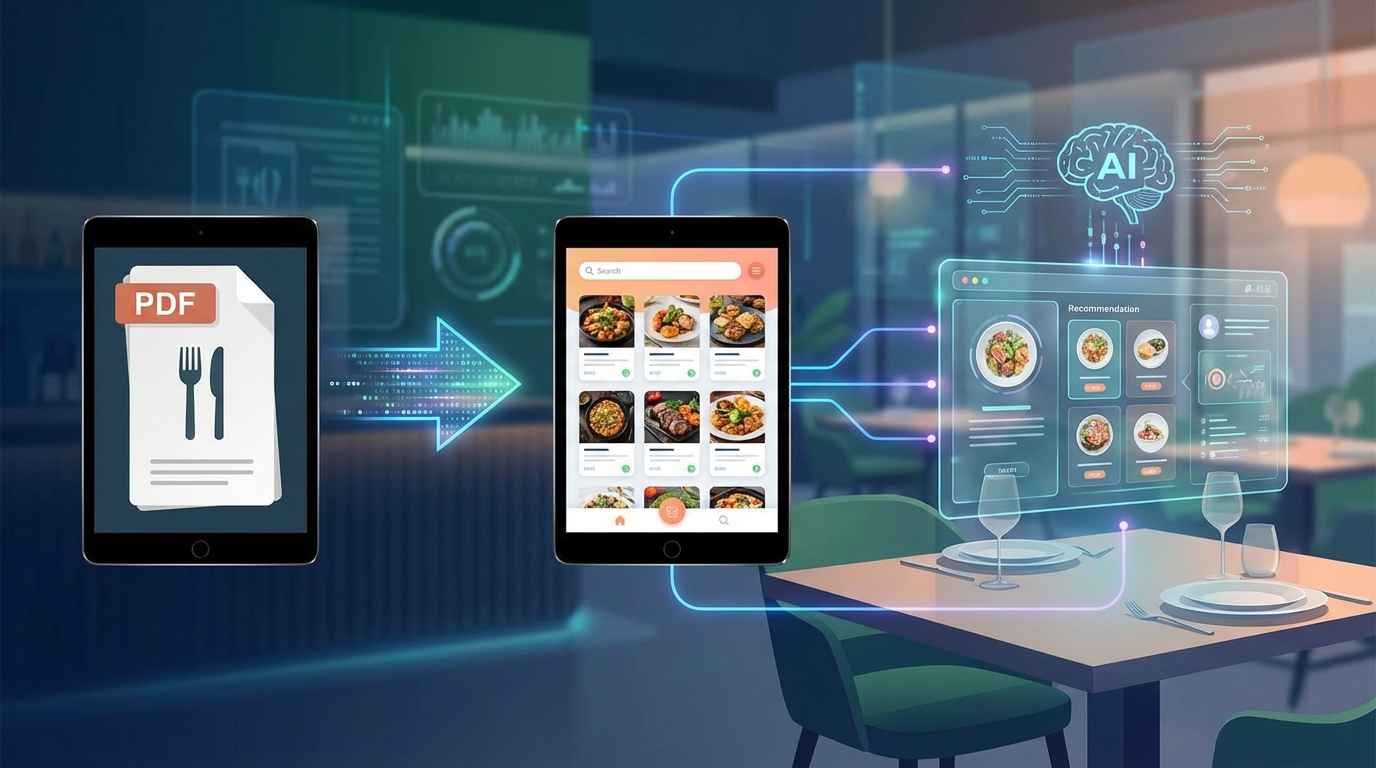
We all remember the first iteration of digital menu restaurant software. It was basically just a PDF file shoved onto a website. It was a mess—guests had to "pinch and zoom" just to read the price of a burger. It looked terrible on a phone, and updating it was a nightmare. If the kitchen ran out of the sea bass at 7:00 PM, the PDF still said it was available, which is a perfect recipe for a frustrated customer.
Thankfully, things moved toward interactive catalogs. These are mobile-first, easy to scroll, and look great. Managers can kill a dish or tweak a price with a single tap. This is also where the 'bio link' started to shine. By tucking a link into an Instagram bio, restaurants began capturing hungry diners the second they saw a photo of a plate. To see how this works in practice, take a look at our breakdown of the bio link for restaurants.
Now, we’ve entered the third generation of digital menu restaurant software: the AI-Powered Digital Twin. Systems like Qret.me don't just sit there; they help. Imagine a menu that doesn't just list the ingredients but has an AI Chef that can explain the flavor profile of the mussels or confirm a gluten-free option. It’s like having your best server available 24/7. That shift has transformed menus from static lists into genuine sales engines.
Why Modern Eateries are Switching to Digital Menu Restaurant Software
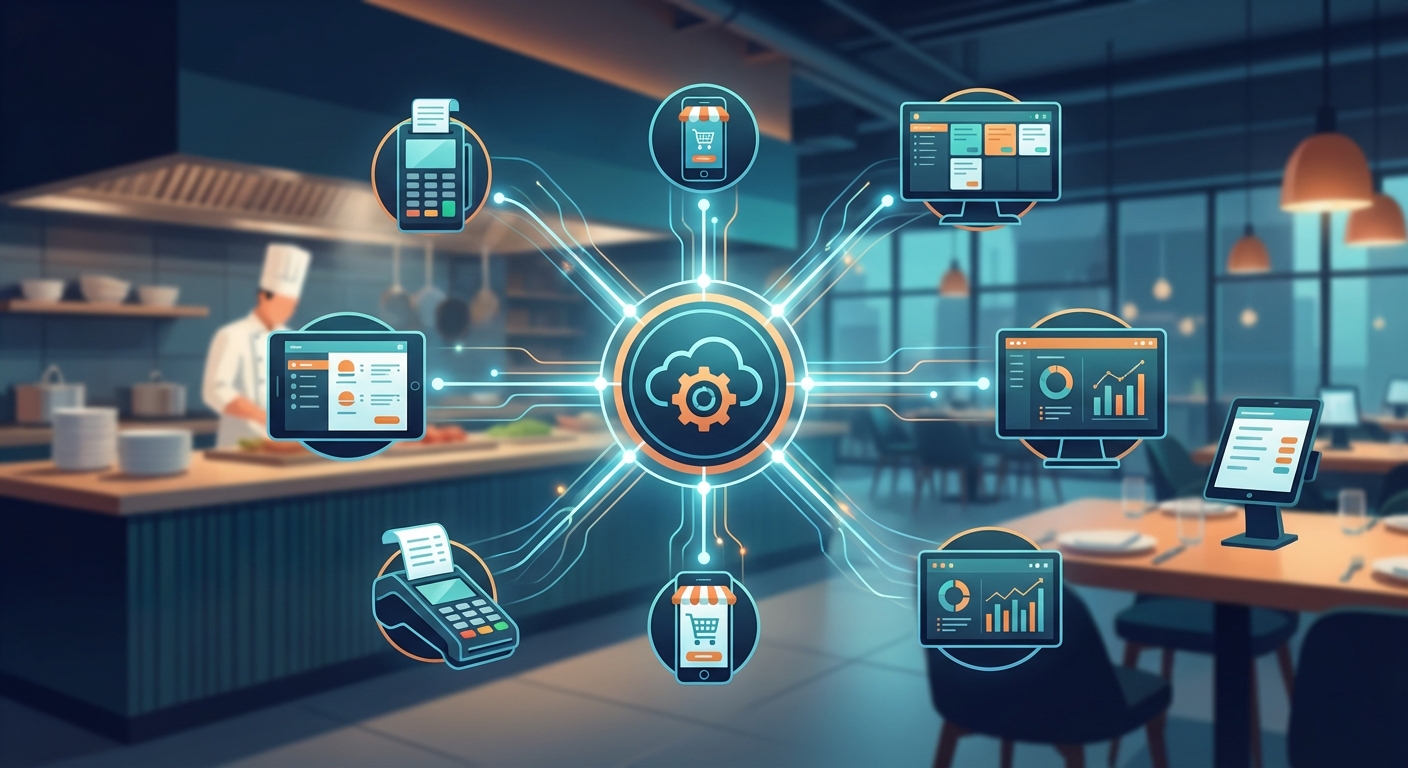
The biggest driver for digital menu restaurant software is, frankly, the Return on Investment (ROI). Printing paper menus is expensive and, in a world of fluctuating food prices, incredibly wasteful. With a digital system, your prices are as flexible as your inventory, which saves a massive amount of overhead annually.
1. Increasing the Average Check: It’s a proven fact that interactive catalogs can bump up order sizes by 15% to 20%. Why? Because the software never forgets to upsell. It suggests the perfect wine pairing for a steak or shows a high-res photo of the lava cake right when the guest is thinking about dessert. Great visuals make people hungrier—and they spend more because of it.
2. Supporting Your Floor Staff: We all know the hospitality industry is struggling with staffing. Implementing digital menu restaurant software isn't about replacing people; it's about letting your current team focus on the actual hospitality. When a guest scans a dynamic QR code and gets an answer from an AI, your server doesn't have to spend five minutes explaining every salad dressing. They can focus on fast, friendly service instead. Some case studies even show AI can cut down phone-in questions by 90%.
3. Using Real Data: A paper menu is a black hole—you have no idea what people are looking at. Modern, data-driven systems change that. You can see exactly which dishes are getting the most clicks. If a dish is popular but nobody is actually ordering it, maybe the price is the problem. Using advanced analytics takes the guesswork out of your business decisions.Must-Have Features in Your Digital Menu Restaurant Software
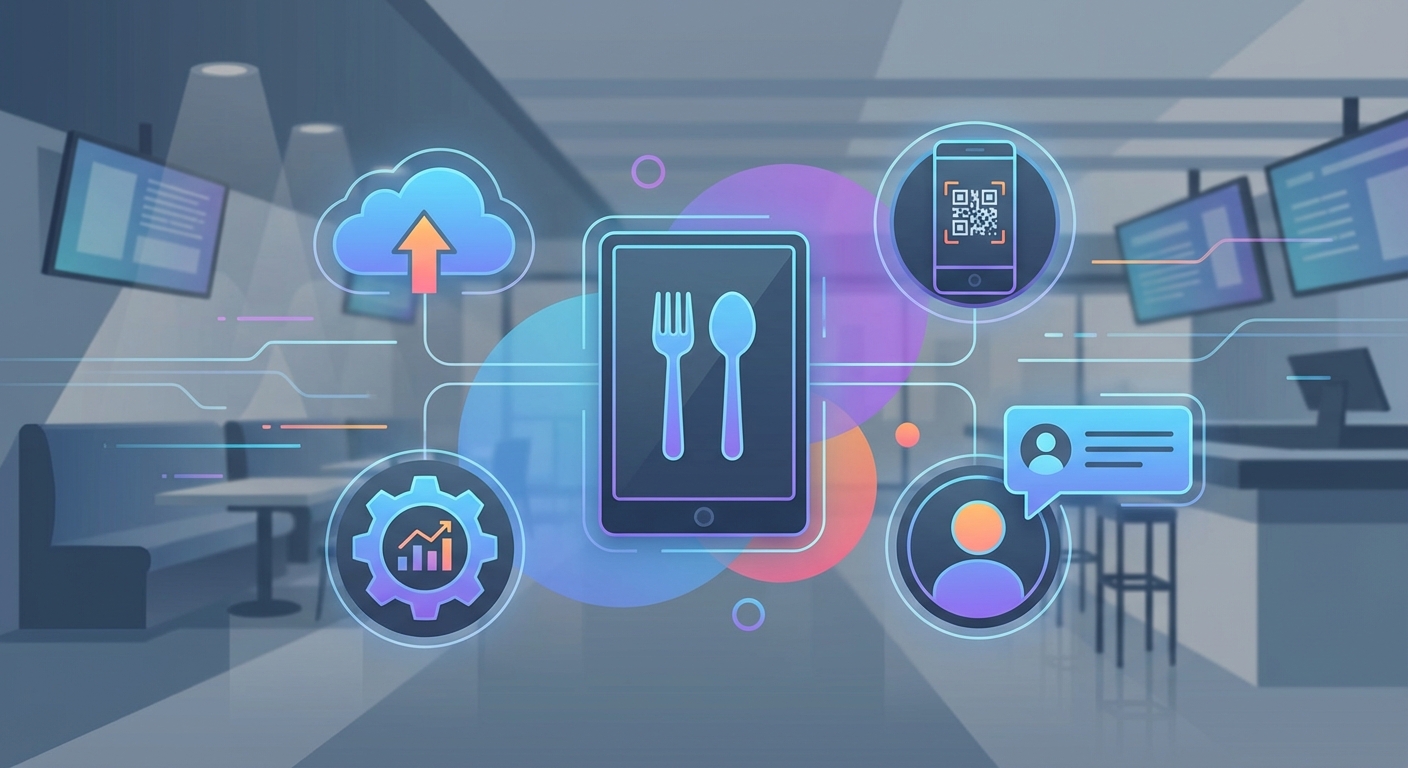
When you're shopping for a platform, don't just settle for a glorified link. Your digital menu restaurant software needs to be a full-scale Digital Twin. Here are the software features you should be looking for in 2024:
1. Management of Dynamic QR Codes
Static QR codes are a liability. If your URL changes, you're stuck reprinting every sticker and table tent. Dynamic management within your digital menu restaurant software allows you to swap the destination link whenever you want. Plus, you can customize the code with your brand colors and logo so it doesn't look like a generic placeholder.
2. High-End Interactive Catalogs
The platform has to be easy to manage. You need an editor that lets you organize Starters, Mains, and Drinks effortlessly. Every item needs a stunning photo—diners are much more likely to try something new if they can see it first. For more on streamlining the guest experience, check out our piece on the contactless ordering system.
3. The Power of AI Nano Agents
This is the "special sauce" of modern digital menu restaurant software. These are custom AI assistants trained on *your* brand. A Qret.me AI Chef Agent knows your menu inside out. If a guest wants a vegan recommendation at 11 PM, the AI handles it. It keeps your business "open" even when the doors are locked.
4. Integrated Booking and Reservations
Your menu should be a bridge to a sale. Top-tier platforms include a built-in online booking system. If a guest is browsing your food on Instagram, they should be able to book a table right then and there without leaving the page to find a competitor.
The Strategic Edge of AI in the Kitchen
AI has moved from science fiction to a practical tool for the modern kitchen. Adding AI agents to your digital menu restaurant software bridges the information gap that often slows down service. We've all seen a server have to run to the kitchen to check an ingredient list while a table waits.
Instead, you can train your AI on your specific recipes and policies. Qret.me actually gives you 100 free credits a month to test this out. For high-volume spots, the Pro Plan even offers voice features—guests can literally talk to their phone at the table to get help. That’s the future of the industry, right there.
AI can even handle the "digital front door." If someone comments on a photo of your pasta on social media, the AI can automatically reply with a link to the menu and a booking button. It’s like having a marketing manager that never sleeps.
Maximizing Your Marketing with Bio Links
Most restaurants treat their "link in bio" as an afterthought, sending people to a cluttered homepage or—worse—a third-party delivery app that eats 30% of the profit. An optimized page built through your digital menu restaurant software is a much smarter play.
With a tool like Qret.me, your bio link page can include:
- Hero Images: Your most "Instagrammable" dishes right at the top.
- Direct Menu Access: No clicking around; just the food.
- Reservation Blocks: A simple calendar for instant bookings.
- Instant AI Chat: For when guests have a quick question before they commit.
Getting Your Digital Menu Restaurant Software Up and Running
Switching to a digital system doesn't have to be a headache. If you follow a simple plan, you can launch your digital menu restaurant software without a hitch:
Phase 1: Visuals and Structure
Don't skimp on photos. Use tools like qret.me/tools to ensure your images load fast and look sharp. Organize your menu logically—think about how a guest actually eats.
Phase 2: Training the "Brain"
Upload your menu data into the AI section. Don't just list the food—add notes about sourcing or preparation styles. Give your AI a "personality"—maybe a 'Friendly Local Expert'—so the automation feels human rather than robotic.
Phase 3: Deployment
Get those QR codes on the tables and in the windows. If you're running a high-end establishment, consider NFC cards where a guest just taps their phone. It adds a touch of luxury to the digital menu restaurant software experience.
Phase 4: Feedback Loop
Make sure your staff knows how the system works so they can guide guests. Then, dive into your analytics. See what's working and what isn't, and adjust your menu accordingly. The best software helps you grow alongside your business.
Why Qret.me is the Gold Standard for Digital Menu Restaurant Software
Qret.me isn't just another tool; it’s an all-in-one ecosystem. It effectively replaces four or five expensive subscriptions. You get the bio link, the QR generator, the booking engine, and the AI chatbot in one dashboard. It also handles multiple languages—English, Spanish, Arabic, you name it—making it the top choice for digital menu restaurant software globally.
We've seen cafes drastically cut printing costs while actually speeding up their table turnover. The Free Plan is a perfect starting point, and as the house gets busier, the Business Plan adds the heavy-duty booking features that really drive revenue.
Common Questions
Is digital menu restaurant software difficult for older guests?
Most people are pretty tech-savvy these days, but it’s always smart to keep a few paper menus on hand for the traditionalists. Interestingly, the AI assistant can actually help seniors by "reading" the menu or answering specific questions about the food.
Do guests need to download an app?
Definitely not. Modern digital menu restaurant software like Qret.me runs entirely in the mobile browser. They scan, they see the food, they're done. No extra friction.
Can I update my prices on the fly?
Yes—and that’s one of the best parts. You can change a price or mark an item as "sold out" from your phone, and it updates for every guest instantly. It's perfect for daily specials or happy hour shifts.
The Bottom Line
The shift toward digital menu restaurant software is a massive win for the hospitality world. It takes a static list and turns it into an interactive, helpful experience for the guest. By creating a Digital Twin, you're not just saving on paper; you're boosting ROI and building better relationships with your diners. In today's market, things like AI agents and optimized bio links are essential tools for staying ahead of the curve.
Ready to bring your restaurant into the modern age? Start building your digital presence with the industry's leading digital menu restaurant software. Give Qret.me a try for free and see how it transforms your operations. No credit card required to get started.