

Restaurant Digital Menu Apps: The Ultimate 2025 Guide
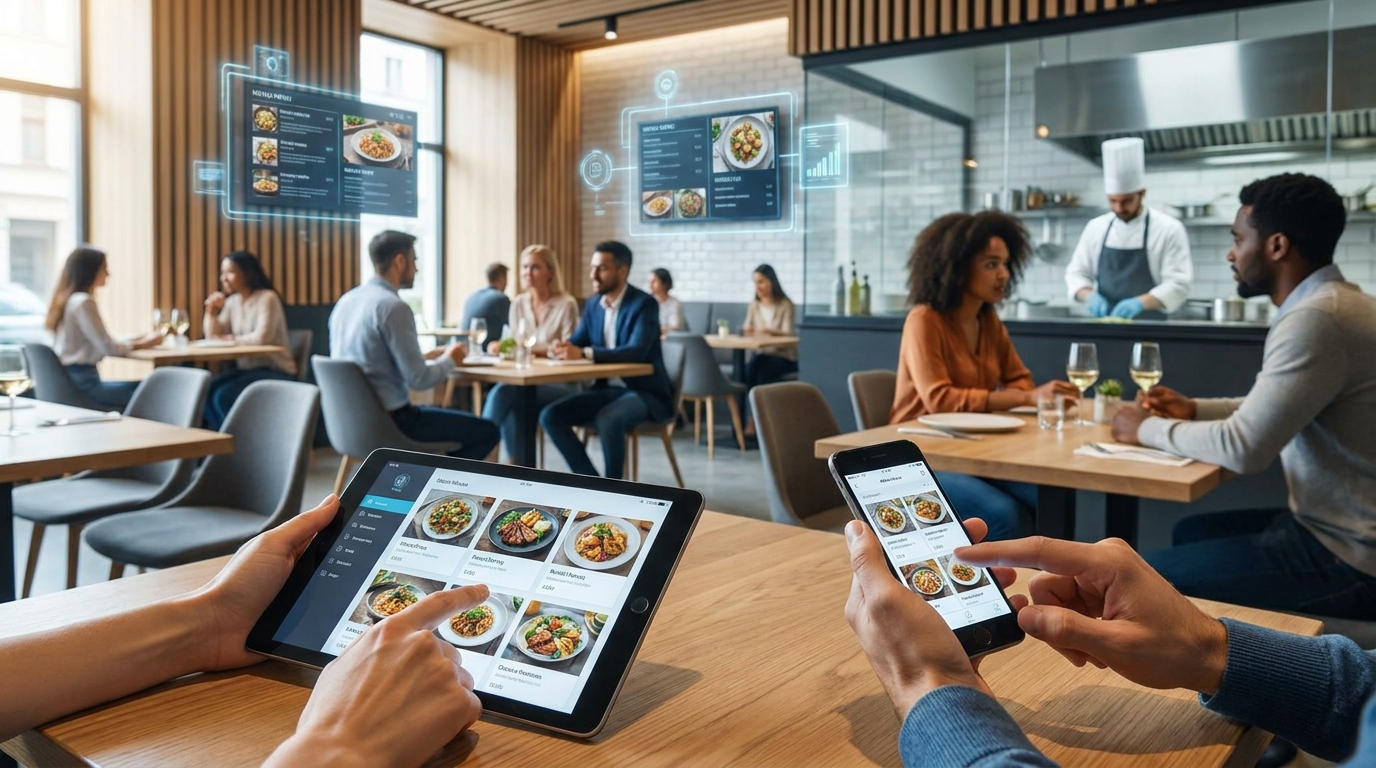
A restaurant digital menu app is far more than just a list of dishes on a screen—it’s the modern backbone of the dining experience. It allows guests to browse and order directly from their own devices, usually through a quick QR scan or a link in a social media bio. By 2025, these systems have undergone a massive evolution. They've moved past the clunky, static PDF files of the early 2020s to become AI-driven powerhouses that handle bookings, answer guest questions, and track preferences. For any restaurant looking to stay relevant, adopting these tools isn't just an option anymore; it's what tech-savvy diners expect.
Switching to a digital menu is one of those rare "win-win" business moves. You’re cutting down on labor costs and ditching the endless cycle of expensive printing—a win for the bottom line. It’s also a win for revenue; most owners see their average order size jump by 20% when they switch to a high-quality digital catalog. Platforms like Qret.me are leading the charge here, bundling bio links, dynamic QR codes, and AI-powered service into a single, intuitive dashboard. You can see these tools in action by exploring our contactless menu solutions or check our plans to see how quickly you can get up and running.
How Dining Has Changed: From Paper to AI
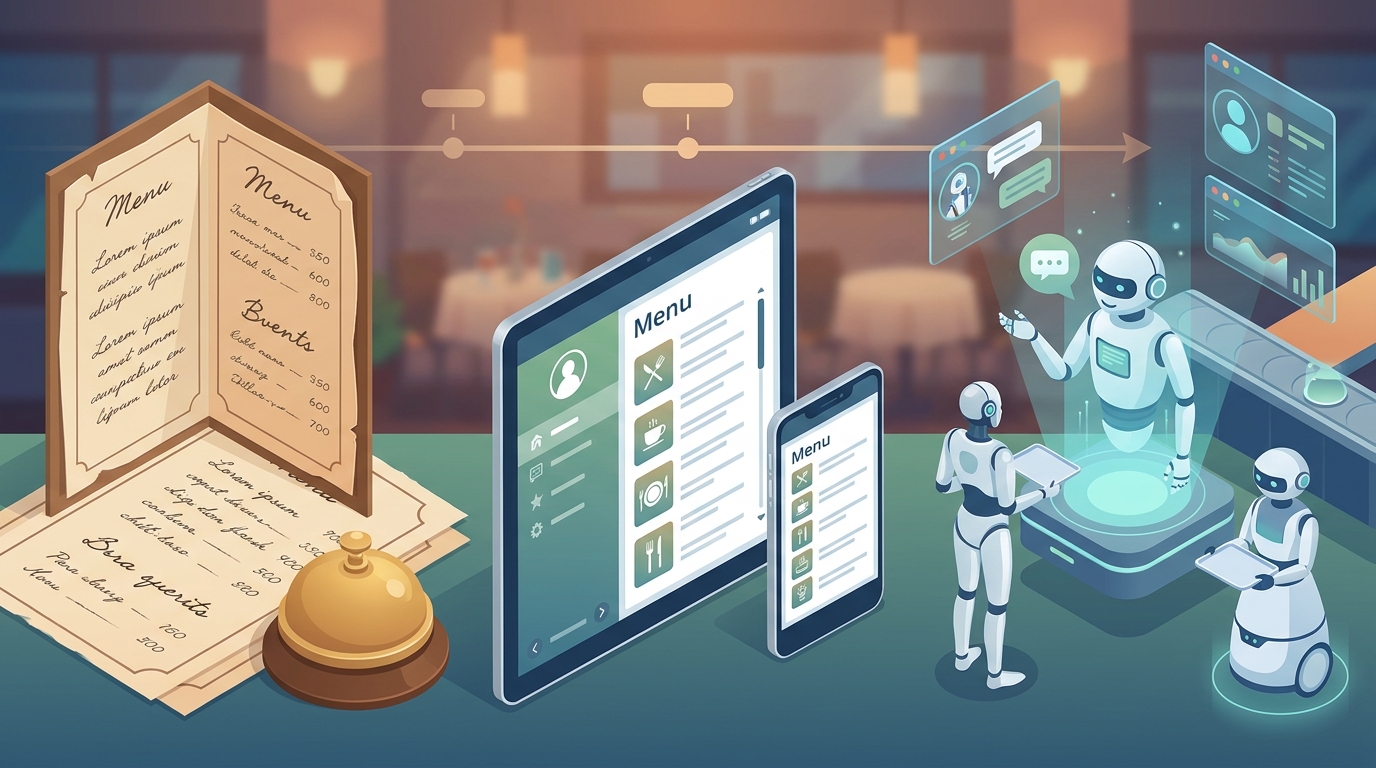
Paper menus were the gold standard for decades, but let's be honest: they’re incredibly rigid. Want to change a price or swap a seasonal ingredient? You’re stuck reprinting the whole batch. The first digital "solutions" were often just PDFs that forced customers to pinch and zoom on tiny phone screens—a frustrating experience for everyone. In the fast-paced world of restaurant marketing 2025, guests want something that feels like a native app—interactive, fast, and perfectly responsive.
This is where the Smart Digital Menu App comes in. These interfaces look stunning on any screen and update the moment you hit "save." Statistics from 2024 show that over 52% of restaurant businesses have already made the jump to digital. Why? Because younger diners, specifically Gen Z and Millennials, prefer using technology to navigate their meal. They want to filter by allergens, count their calories, and see a high-res photo of that pasta before it ever hits the table.
The most advanced systems now create a "Digital Twin" of your restaurant. Take Qret.me's digital menu, for example. It doesn't just list food; it acts as a digital version of your best server. Using AI "Nano Agents," it can explain the origin of your steak or suggest a wine pairing that actually makes sense. It’s working 24/7, even when the doors are locked, providing a level of service that traditional shops just can't match without an army of staff.
Why Paper is Not Enough Anymore
- High Costs: Most restaurant owners are shocked to realize they spend between $1,500 and $5,000 annually just on printing and menus—and that's not even counting the labor to swap them out.
- No Data: Paper is a "black hole" for information. You have no idea which dishes people are looking at most or where they lose interest. You’re basically flying blind.
- Hard to Update: Running out of the daily special on a busy Friday is a headache. With paper, you have to manually tell every table; with digital, you just toggle it off.
- Sustainability: Eco-conscious dining is a massive trend for 2025. Moving away from paper is an easy way for a restaurant to shrink its carbon footprint and appeal to green-minded guests.
The Psychology of Digital Menus: Why Customers Spend More
There’s a fascinating psychological shift that happens with a digital.menu. When guests browse on their own phone, they don't feel the "eyes" of a server waiting for an order. This low-pressure environment encourages them to linger and browse. Because a restaurant digital menu app can showcase high-quality photos for every single item, it triggers visual hunger much more effectively than a wall of text ever could.
Then there's the smart cross-selling. If someone taps on a burger, the app can instantly suggest a specific craft beer or a side of those truffle fries everyone loves. This kind of automated upselling is consistent, polite, and—most importantly—it works. It's a cornerstone of any restaurant marketing 2025 strategy. The data doesn't lie: check averages usually climb by 15-25% because the app never forgets to ask if they want to see the dessert tray.
Key Parts of a Great Digital Menu App
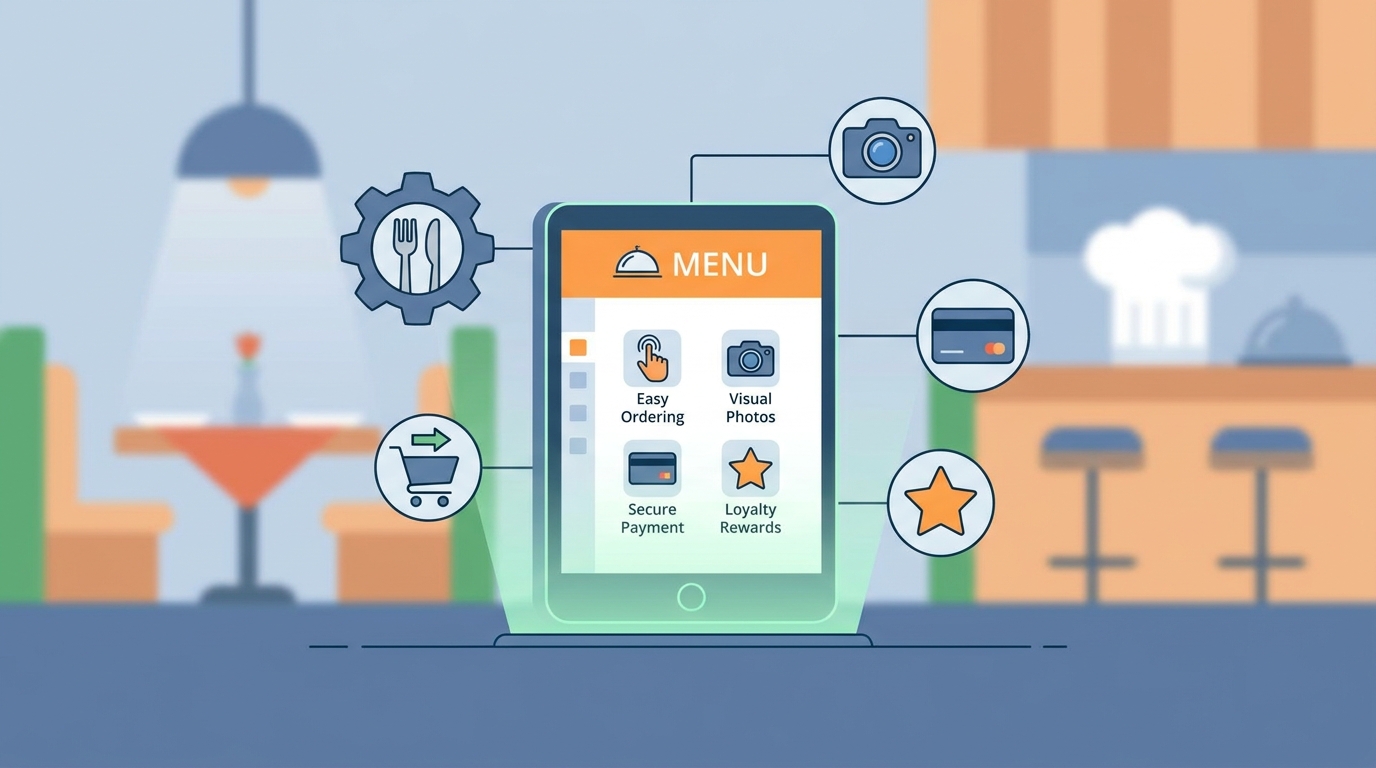
A great digital menu shouldn't just be a digital version of your paper one—it should be a sales machine. Explore our solutions to see how these features come together to create a frictionless guest experience.
1. Beautiful Photos and Video
We've all heard that people eat with their eyes first, but did you know that professional food photos can boost sales by 30%? Digital menus allow you to go beyond a single thumbnail. You can show off multiple angles or even short videos of a dish being plated. That kind of transparency builds immediate trust between the restaurant and the guest.
2. Easy Categories and Smart Filtering
Navigation is everything. You should be able to group items into logical sections like Small Plates, Mains, and Cocktails. A good editor lets you hide the lunch menu and bring up dinner with a single click. Plus, advanced systems let guests filter by their own dietary rules—like "Vegan" or "Gluten-Free"—making your restaurant a go-to spot for people with specific needs.
3. Social Media Integration and Bio Links
In 2025, your restaurant is often "discovered" on Instagram or TikTok long before someone walks through the door. This makes your bio link page incredibly valuable. It’s the bridge that turns a follower into a customer by housing your menu, booking system, and contact info in one place. Using a specialized bio link also means you can finally see exactly which social platform is actually putting bums on seats.
The Tech Side: QR Codes and Data Analytics
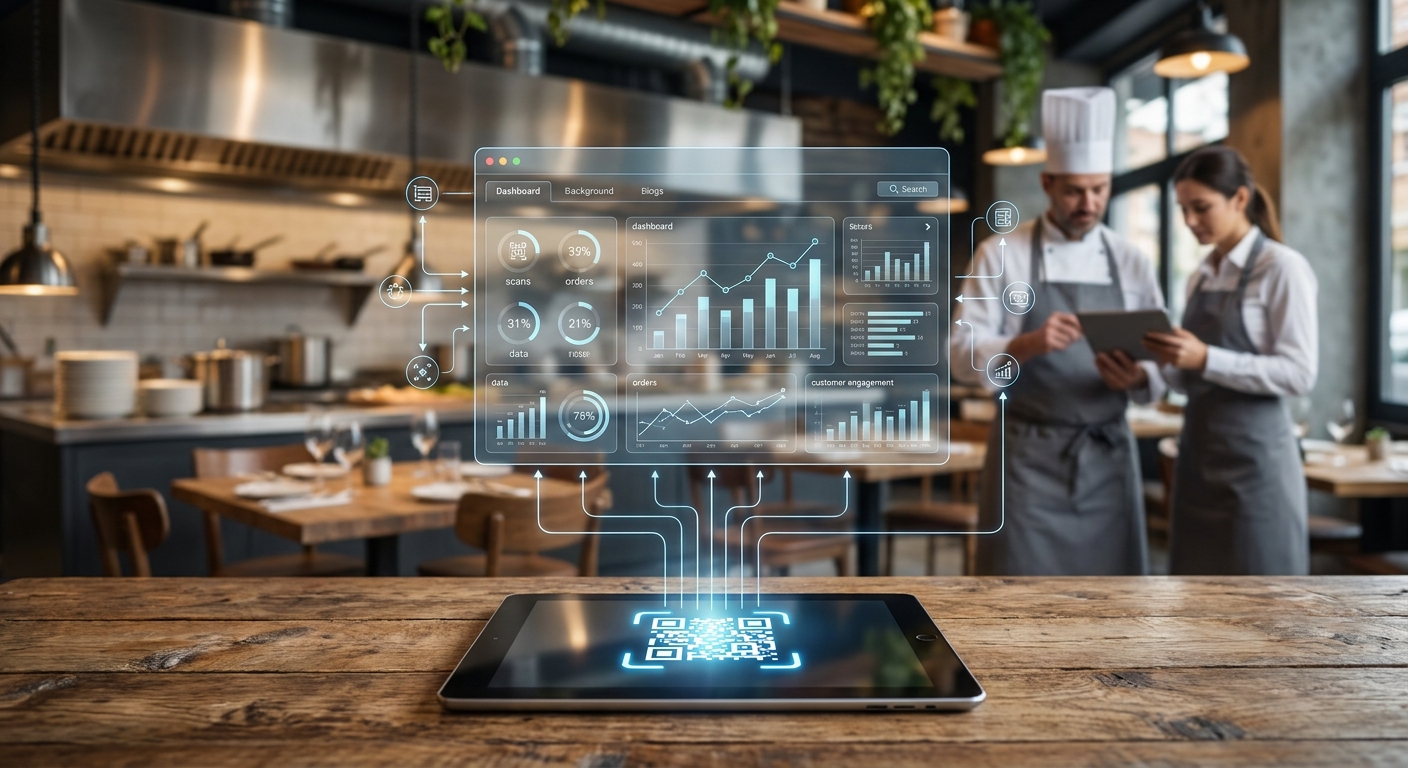
QR codes are the glue connecting the physical table to your digital world. But don't be fooled—not all codes are built the same. If you're running a professional restaurant, you need to know the difference between static and dynamic.
Dynamic QR Codes
A static code is permanent. If you change your menu's web address, those stickers on your tables become useless overnight. A QR code generator that creates dynamic links, like the one we provide at Qret.me, lets you swap the destination URL whenever you want. You’ll never have to scrape a sticker off a table again. Take a look at our QR code generator features to see how much easier your operations can become.
Learning from Customer Data
Paper menus are silent; digital menus talk back. With QR code analytics, a restaurant manager can finally see the "hidden" side of their business:
- Scan Count: Which tables or zones are the busiest throughout the day?
- Busy Times: When exactly is the menu being hit the hardest? (Great for staffing decisions).
- Customer Devices: Knowing if your guests prefer iPhones or Androids can help you tailor your mobile advertising.
- Conversion Rates: How many people are looking but not buying? This is the ultimate metric for menu design.
If you notice a spike in people viewing the cocktail menu late at night but not ordering, you can use your app to pop up a "Happy Hour" special to nudge them over the finish line.
AI in the Dining Room: The Rise of Nano Agents
The real game-changer in restaurant marketing 2025 is Artificial Intelligence. We're moving beyond simple lists into the era of the AI assistant. At Qret.me, we call these "Nano Agents." These aren't those annoying, basic chatbots you see on bank websites; they're sophisticated helpers designed to mirror your brand's voice.
How the AI Assistant Helps Guests
These assistants learn your restaurant inside and out. A guest can ask, "How spicy is the curry?" or "Is the kitchen safe for someone with a nut allergy?" and get an instant, accurate answer in any language. It makes guests feel cared for, especially those with strict dietary needs. It can even take over the role of a sommelier, suggesting a crisp white wine to pair with the grilled sea bass.
Operational Efficiency through AI
The AI assistant isn't just for the guests; it's a massive help for the staff too. It handles all the "boring" questions—opening times, parking, dress codes—which frees up your hosts to actually focus on hospitality. This tech allows a tiny neighborhood restaurant to offer the kind of high-touch service you'd expect from a massive, well-staffed enterprise.
A Real Example: Casa Verde
Look at Casa Verde. They were struggling with a high volume of tourists and the nightmare of printing menus in four different languages. They switched to a Qret.me digital menu featuring an AI Chef. Now, guests ask questions in their native tongue and get answers immediately. The restaurant didn't just save a fortune on translation and printing—they also saw order errors (and the resulting waste) plummet.
Saving Money and Improving Workflow
At the end of the day, a restaurant digital menu app is a tool for your bottom line. It wipes out the costs of ink and paper, sure, but it also streamlines your team's workflow by cutting out the "menu run" every time a new table sits down.
Lower Staff Costs
Finding good staff is harder than ever. An AI-powered menu essentially acts as an extra pair of hands. While your servers are busy running plates, the AI assistant is answering questions at the table. It lets you maintain a high level of service with a leaner team, without making the guests feel ignored.
Integrated Booking Systems
Your menu should also be a gateway for future business. A smart system integrates an online booking system directly into the bio link. Imagine a customer browsing your menu on Instagram on a Tuesday and booking their Saturday night table right then and there—capturing that lead while they're actually hungry for what you're serving.
How to Set Up Your Digital Menu in 4 Steps
Getting your restaurant onto Qret.me is surprisingly straightforward—you don't need a degree in computer science to do it. Just follow these steps:
1. Choose Your Plan
If you're a small cafe, the Free Plan is a great way to test the waters. Larger restaurant groups usually go for the Business Plan to unlock the full food catalog and those advanced AI capabilities.
2. Upload Your Catalog
Get those high-quality photos ready and write some mouth-watering descriptions. Pro tip: use our Image to WebP Converter. It ensures your photos look crisp but load instantly, even if your guest is on a spotty 5G connection.
3. Train Your AI Assistant
This is where the magic happens. Feed the AI details about your ingredients, your story, and even your favorite local spots. You can give your AI assistant a name and a personality that fits your vibe—whether that’s "fine dining professional" or "casual neighborhood friend."
4. Deploy Your QR Codes
Generate a custom QR code that includes your restaurant logo. Stick them on tables, windows, or even takeout bags. Since they're dynamic, you can change the daily specials later without ever touching a printer. It’s the simplest way to execute a contactless menu strategy.
Future Trends: NFC and 2026 and Beyond
As we look toward 2026, restaurant tech is only getting faster. NFC tags are set to become the standard; instead of even opening a camera, guests will just tap their phone on the table to pull up the menu. We’re also seeing the rise of Voice AI, where guests can simply talk to the menu to place an order, with the AI assistant handling the request and firing it straight to the kitchen display.
Conclusion
Investing in a restaurant digital menu app is the smartest move you can make for 2025. It’s about saving money, sure, but it’s also about understanding your customers and serving them faster. Platforms like Qret.me make it easy to build a "Digital Twin" of your business that works as hard as you do. Stop fighting with static paper and rising costs. Start for free with Qret.me today and see how modern tech can boost your margins and keep your guests coming back for more.
FAQ
What is a restaurant digital menu app?
It’s a mobile-optimized platform that lets guests browse your menu and prices on their own phones. It’s much more than a PDF; it's an interactive tool that can handle everything from photos to dietary filters.
Can I update the menu in real-time?
Absolutely. If you run out of the fish of the day, you can hide it from your dashboard in seconds. The change is instant, so guests never try to order something that isn't available.
Is it expensive for a small restaurant?
Actually, it's usually cheaper than the cost of printing. Qret.me offers a free version to help smaller restaurant setups get a professional digital.menu without a huge upfront investment.
Do customers need to download an app?
Nope. The best restaurant digital menu app solutions (like ours) work right in the phone's browser. Just scan the QR code and the menu pops up—no downloads or friction required.
How does the AI assistant handle allergies?
You provide the AI assistant with your ingredient list. If a guest asks about an allergen, the AI scans that data to give an instant answer. (Though we always recommend a quick chat with the staff for very severe cases just to be safe!)