

AI Chatbot for Restaurant Reservations: How It Works and the Best Options in 2026
For modern hospitality operators, a ringing phone isn't a sign of a booming business—it's an operational bottleneck. With labor costs climbing and front-of-house staffing a constant headache, restaurants need automated systems to capture guest intent instantly without losing that hospitable touch. Modern reservation platforms have evolved far beyond those clunky, rigid web forms. Today, conversational AI platforms powered by advanced language models manage guest bookings, run waitlists, and answer complex menu questions around the clock.
An AI chatbot for restaurant reservations works by utilizing natural language processing (NLP) for intent detection in booking flows to interpret human text or speech, automatically querying live table inventory, and executing bookings, modifications, or cancellations directly within platforms like OpenTable, Resy, or proprietary reservation engines without human intervention.
- NLP-Driven Efficiency: Natural language processing (NLP) for intent detection in booking flows allows AI to capture complex reservation requests in a single, conversational sentence.
- Seamless Ecosystem Integration: Modern reservation bots sync directly with primary APIs like the OpenTable Connect API, the Resy reservation system integration, and leading cloud POS hardware.
- Drastic No-Show Reductions: Implementing no-show reduction via automated SMS reminders and integrated deposit collection helps secure committed bookings.
- Unified Digital Presence: Platforms like Qret.me provide a unified "Digital Twin" ecosystem that merges AI booking, digital menus, dynamic QR codes, and SMS follow-ups in a single hub.
What is Natural Language Processing (NLP) for Intent Detection in Booking Flows?
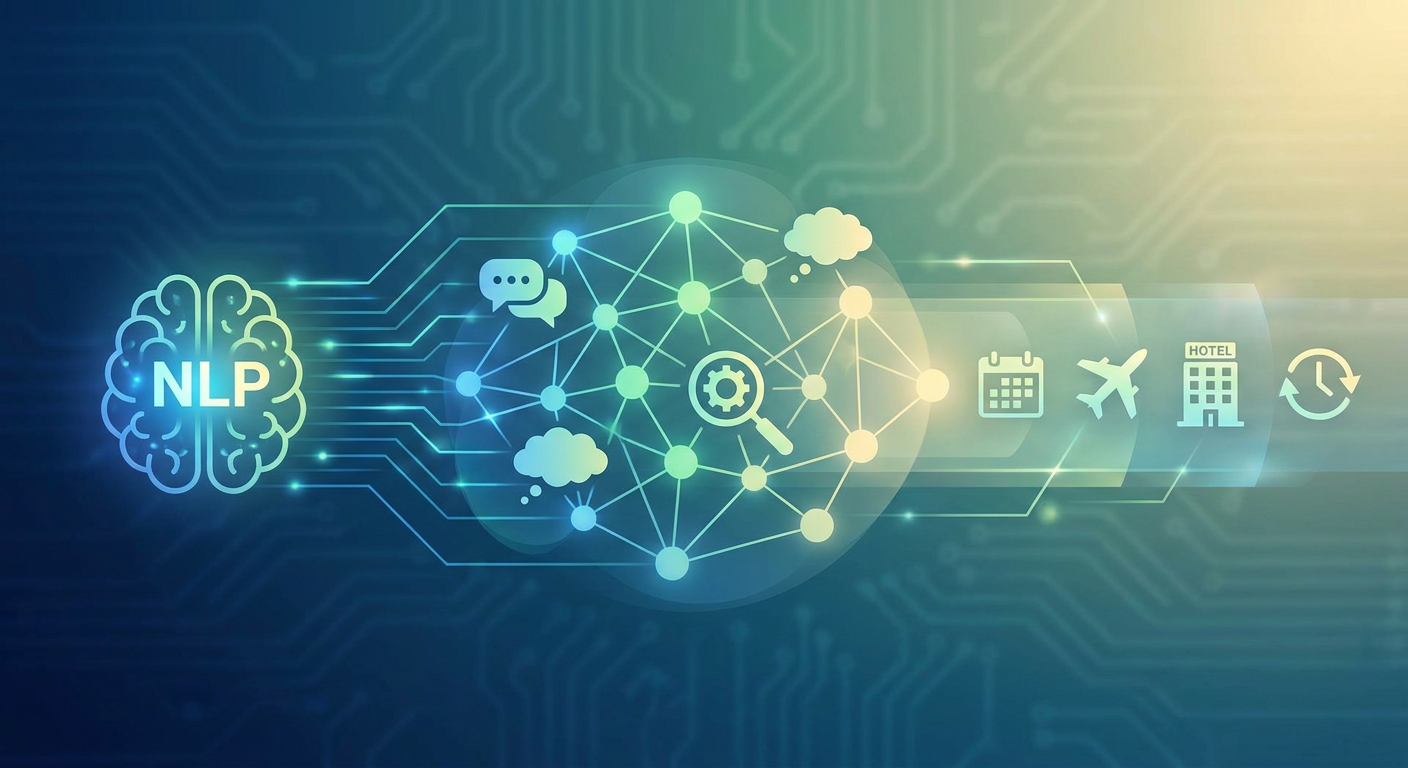
At the absolute core of any decent restaurant booking assistant, you'll find natural language processing (NLP) for intent detection in booking flows. Traditional chatbots were incredibly frustrating—relying on rigid, decision-tree structures. If a guest typed "Can I get a table for four at 7 PM?" instead of clicking your exact date and time dropdowns, the system would break. Natural language processing actually parses raw text, pulls out entities (like date, time, party size, and dietary restrictions), and figures out what the user actually wants—their "intent."
Let's look at an example. If a guest texts: "Hey, I need to bring a party of six for my wife's birthday tomorrow night around 8, but one of us is in a wheelchair," an NLP-enabled bot identifies multiple variables simultaneously:
- Intent: Create Reservation
- Party Size: 6 guests
- Date: Tomorrow [relative date resolved to absolute calendar date]
- Time: 20:00 (with a search window of +/- 30 minutes)
- Special Note/Tag: Birthday celebration
- Accessibility Requirement: Wheelchair accessible table
By pulling all these details out of a single conversational sentence, the system saves everyone from tedious back-and-forth menus. If a critical piece of information is missing—say, the party size—the AI selectively prompts the user: "I'd love to look for a table tomorrow night! How many guests will be joining you?" This conversational flexibility keeps booking abandonment rates low and gets guests confirmed much faster.
How AI Reservation Chatbots Integrate with Restaurant Tech Stacks
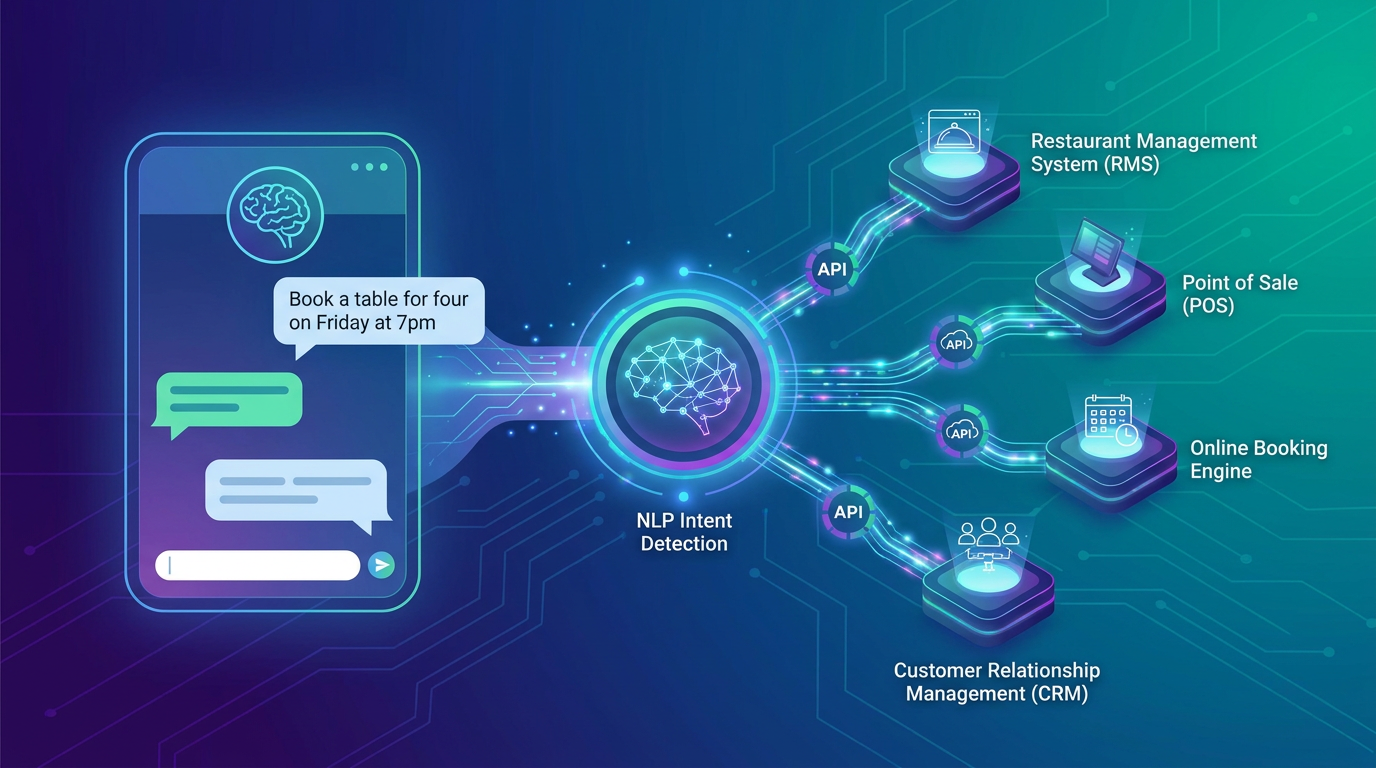
An AI booking assistant can't operate in a vacuum. It has to talk to your existing restaurant management software in real time. To make sure your table inventory stays accurate, these bots rely on direct integrations with host-stand software and kitchen management systems.
The OpenTable Connect API
If you run your venue on OpenTable, the OpenTable Connect API serves as the secure bridge between your AI chat interface and your digital floor plan. When a guest asks for a table in chat, the AI queries the OpenTable Connect API to check live availability based on your table combinations and shift rules. Once the guest confirms, the booking gets injected right into the OpenTable system, updating the host app at the front door in milliseconds. It prevents double-bookings, meaning your walk-ins and digital bookings won't clash.
Resy Reservation System Integration
Similarly, a robust Resy reservation system integration lets your AI assistant read and write directly to the Resy OS platform. This integration supports high-touch hospitality features, such as recognizing VIP status, applying guest notes (like "prefers the patio"), and respecting custom pacing rules so your kitchen doesn't get slammed with fifty covers at the exact same time.
POS Handoff and Table Status Syncing
On top of reservation engines, advanced AI systems link up with Point of Sale (POS) hardware like Toast or Square. When the host seats a party, the POS tells the AI system that the table is occupied. If another customer chats in to ask about immediate walk-in availability, the AI checks active table statuses to give them an accurate, real-time wait time.
The Multi-Channel Entry Points: Where Guests Book in 2026
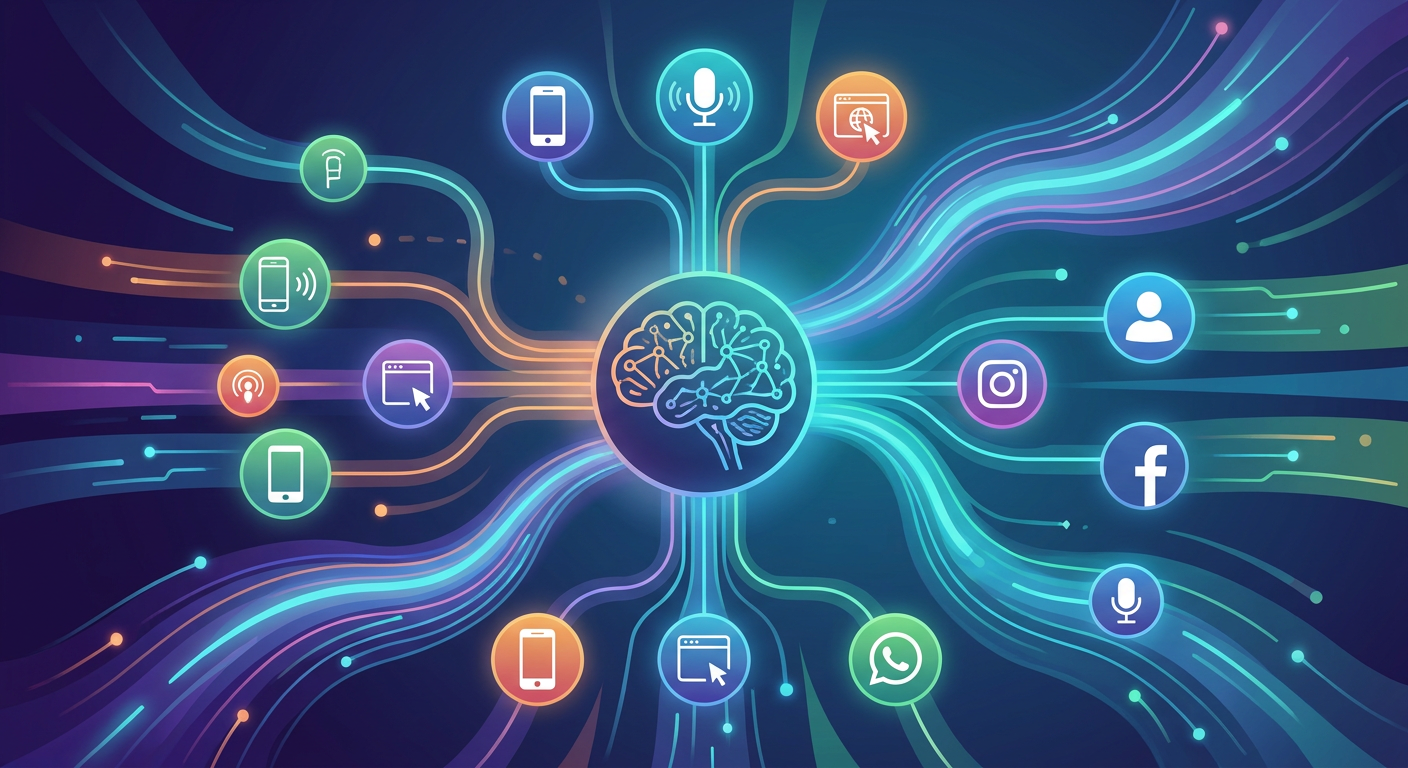
Guests don't just visit a restaurant's website to book tables anymore. They discover spots across a mix of digital channels, which means your booking assistant needs to be active wherever your customers are scrolling.
WhatsApp Business API and SMS Confirmations
The WhatsApp Business API has grown into a major channel for restaurant reservations worldwide. Guests can start a chat with your official WhatsApp number, browse the menu, specify their details, and secure their table. Once confirmed, the bot drops a WhatsApp confirmation card. This channel handles rich media beautifully, letting you send directions, parking maps, or interactive reservation cards straight to their phone.
Google Business Messages
When hungry diners search for "restaurants near me" on Google Maps, they see a direct "Message" button right on the Business Profile. The Google Business Messages reservation entry point routes these high-intent prospective diners straight to your AI agent. Instead of leaving Google Search to load a slow third-party website, guests complete their booking inside the chat interface, keeping friction to a minimum.
Social Media Messaging (Instagram and Facebook)
Many diners browse Instagram to scope out dishes before deciding where to eat. Modern AI assistants can automatically respond to direct messages (DMs) or comments on Instagram. If a user comments "How do I book?" on a photo of your signature pasta, the AI can reply with a direct booking link or start a DM to guide them through the reservation process.
Advanced AI Capabilities: Managing Waitlists, Modifications, and No-Shows
Handling a straightforward, two-person booking is relatively simple. The real test of an enterprise-grade AI chatbot is how it manages the messy, dynamic scenarios that happen every day in a busy dining room.
Waitlist Queue Automation
During peak dinner rushes, a physical waiting area can quickly become a chaotic mess. With waitlist queue automation, the AI assistant manages virtual queues without your host losing their mind. When table inventory is fully committed, the bot offers the guest a spot on the digital waitlist, calculates an accurate wait time based on historical table-turn data, and adds them to the queue. The bot updates them via SMS as they move up the list and prompts them to confirm when their table is ready. If they don't reply within a set window, the system automatically moves to the next party in line.
Party-Size Modifications and Cancellations Mid-Conversation
Diners constantly change their plans. A guest might say, "Actually, can we make that six people instead of four?" halfway through a booking flow, or text hours later to adjust their arrival time. The AI must interpret this party-size modification mid-conversation, query the backend database to see if a table for six is actually available, adjust the reservation variables, and confirm the new details. If the larger party size won't fit, the bot elegantly offers alternative times instead of just canceling the request.
No-Show Reduction via Automated SMS Reminders
Empty tables are a direct hit to your bottom line. Implementing no-show reduction via automated SMS reminders is one of the easiest operational wins. The AI chatbot sends timely, interactive SMS messages 24 hours and 2 hours before the reservation. Instead of requiring a phone call to cancel, the guest can simply reply "CANCEL" or "DELAY 15 MINS". The AI immediately processes this, frees up the table for waitlist entries, and updates the host stand.
To further protect margins for popular slots or major holidays, the AI can securely capture deposits and prepayments directly within the chat interface, ensuring guests have some skin in the game.
| Feature / Capability | Basic Rule-Based Bots | Advanced AI Agents (e.g., Qret.me) |
|---|---|---|
| Natural Language Processing | No (Button/Keyword dependent) | Yes (Full intent & entity extraction) |
| Mid-Flow Changes | Fails (Requires restarting the flow) | Adapts dynamically to context shifts |
| Waitlist Management | Static notifications only | Automated queue ranking and SMS follow-ups |
| Menu & Policy Q&A | Fails or redirects to external URL | Answers questions about ingredients, parking, and rules |
| Human Escalation | Abrupt end or offline email form | Seamless handoff to SMS or WhatsApp staff alert |
Security, Privacy, and Performance Metrics
Deploying conversational AI requires careful attention to data security and performance optimization to ensure a smooth guest experience.
GDPR and CCPA Guest Data Handling
Because reservation assistants collect personally identifiable info (PII) like names, email addresses, phone numbers, and dietary preferences, they have to comply with regional privacy regulations. Modern AI systems ensure GDPR and CCPA compliant guest data handling by encrypting all data in transit and at rest, offering automated data-deletion workflows, and presenting clear opt-in disclosures before harvesting phone numbers for SMS marketing or reservation updates.
Human Escalation Thresholds
No AI system is perfect. When a conversational loop becomes repetitive or a guest has a highly specific request (like planning a complex corporate event), the bot must hit a fallback-to-human escalation threshold. Instead of frustrating the customer, the AI flags the conversation, transfers the history to a human manager via SMS or Slack alert, and informs the guest: "I want to make sure we get this perfect for you, so I'm bringing in our event coordinator to assist you directly!" This maintains a high standard of hospitality.
Key Performance Indicators (KPIs) to Track
To evaluate your AI booking agent's return on investment, monitor these key performance indicators:
- Conversation Abandonment Rate: The percentage of users who start a reservation flow but drop off before confirming. High rates point to confusing prompts or overly rigid validation steps.
- Conversion Rate: The ratio of total chat sessions that result in a confirmed reservation or waitlist signup.
- No-Show Rate: The reduction in missed reservations after deploying automated SMS reminders compared to baseline historical data.
- Human Intervention Rate: The percentage of conversations that require a live team member to step in.
The Best AI Chatbot Options for Restaurant Reservations in 2026
When selecting the right platform for your restaurant, consider the level of customization, channel support, and integration depth your venue requires.
1. Qret.me — The Digital Twin Platform (Best All-in-One Solution)
If you want a unified digital presence rather than managing multiple disconnected software tools, Qret.me is a powerful, all-in-one choice. Designed as a comprehensive "Digital Twin" platform by founder Siamak Alamdari in Istanbul, Turkey, Qret.me goes far beyond simple link directories to offer a completely integrated reservation, communication, and marketing ecosystem.
With Qret.me's Business Plan, restaurants get access to the Online Booking System and a beautifully presented Digital Menu. You can train Qret's AI assistant directly on your bio blocks, specific dining policies, and custom notes. The AI agent acts as a virtual host, answering guests' questions about allergens, parking, and pricing, while helping them book tables via a customizable "Booking Block" embedded right on your mobile-optimized landing page.
For example, Casa Verde—a busy restaurant in Ankara—implemented a Qret.me dynamic QR menu coupled with the AI Chef agent. This solution eliminated physical printing costs and completely automated allergen questions. Guests simply scan the QR code, review the menu, ask the AI questions, and confirm their table without waiting for staff. Additionally, Qret.me includes Dynamic QR Codes, detailed visitor insights through its Growth Engine & Analytics, and an automated Instagram reply feature that turns social media comments into reservation leads.
2. Popmenu (Best for Marketing Automation)
Popmenu is an established option for restaurants seeking deep interactive menu features combined with automated marketing tools. Its AI assistant captures phone calls, answers basic FAQs, and sends guests reservation links via text, helping to convert inbound calls into online bookings.
3. Slang.ai (Best for Phone Call Automation)
Slang.ai focuses on capturing inbound phone traffic. Utilizing natural language processing, Slang handles incoming phone calls, processes reservation requests, and syncs directly with platforms like OpenTable and Resy, helping to keep host stands quiet during busy dinner shifts.
4. Resy OS & OpenTable GuestCenter (Best for Native Integrations)
For venues that prefer to stay within a single proprietary system, both Resy and OpenTable offer built-in SMS confirmation tools and web-based booking flows. While these lack the flexible conversational Q&A features of a custom-trained AI assistant, they provide reliable baseline utility for high-volume host stands.
How to Configure Your AI Reservation Bot for Success
To maximize conversions and streamline operations, follow these configuration best practices:
- Import Your Policy Data: Upload your booking rules, group dining guidelines, cancellation policies, and parking details into your AI's knowledge base so it can handle inquiries without human help.
- Connect Your Tech Stack: Ensure your booking bot is integrated with your core reservation engine (such as Resy or OpenTable) and your front-of-house host stand software.
- Set Up Multi-Channel Access Points: Place booking links and QR codes in highly visible areas. Add conversational chat triggers to your Instagram account, your Google Business Profile, and your physical menu boards. For advice on setting up digital menu systems, explore our Digital Menu Setup Guide.
- Create Smart No-Show Safeguards: Configure your system to send automated SMS reminders 24 hours before a booking, giving guests a simple, one-click option to confirm or cancel.
- Monitor and Refine: Review your chatbot conversations weekly to identify questions that trigger human escalations, and update your knowledge base to keep improving the system's performance.
If you're interested in learning more about setting up digital booking systems for your business, check out our guide on How to Set Up an AI Booking System.
Take Your Restaurant Reservations to the Next Level with Qret.me
Replacing traditional phone booking tasks with conversational AI helps your restaurant capture bookings around the clock, streamline operations, and minimize costly no-shows. If you are looking for an all-in-one solution that replaces multiple expensive subscriptions, Qret.me provides a complete digital storefront for your business.
With Qret.me, you can create a beautiful, mobile-friendly bio link page, build an interactive digital menu, generate customizable dynamic QR codes, and train a custom AI assistant on your restaurant's unique menu and policies. Ready to streamline your host stand? Sign up for Qret.me today and launch your restaurant's AI assistant for free!
Frequently Asked Questions
How does NLP intent detection work for restaurant bookings?
Natural language processing (NLP) parses a user's conversational text to extract key booking details—such as date, time, and party size—in a single step, eliminating the need for rigid click-through forms and providing a smoother guest experience.
Can an AI booking assistant prevent duplicate reservations?
Yes. By integrating directly with reservation APIs like OpenTable or Resy, the AI checks live table availability in real time and secures the reservation instantly, preventing double-bookings.
What is the benefit of using WhatsApp for reservation confirmations?
The WhatsApp Business API lets restaurants send rich confirmations, directions, and menus directly to a platform guests already use, keeping communication centralized and accessible.
How do automated SMS reminders help reduce restaurant no-shows?
Automated reminders prompt guests to confirm or cancel their booking with a quick reply, letting you quickly free up empty tables for waitlist walk-ins.
What happens if the AI chatbot cannot understand a guest's request?
If the conversation hits a human escalation threshold, the system flags the issue and hands the chat history over to your staff, ensuring guest inquiries are always handled gracefully.
Are AI reservation systems compliant with data privacy laws?
Yes. Professional systems use secure data encryption and respect GDPR and CCPA guidelines to protect guest contact information and personal details.
Can I use Qret.me to manage my restaurant's digital presence?
Absolutely. Qret.me lets you run an interactive digital menu, set up a smart online booking system, customize trackable QR codes, and deploy an AI assistant trained on your restaurant's policies—all within one simple dashboard.